+

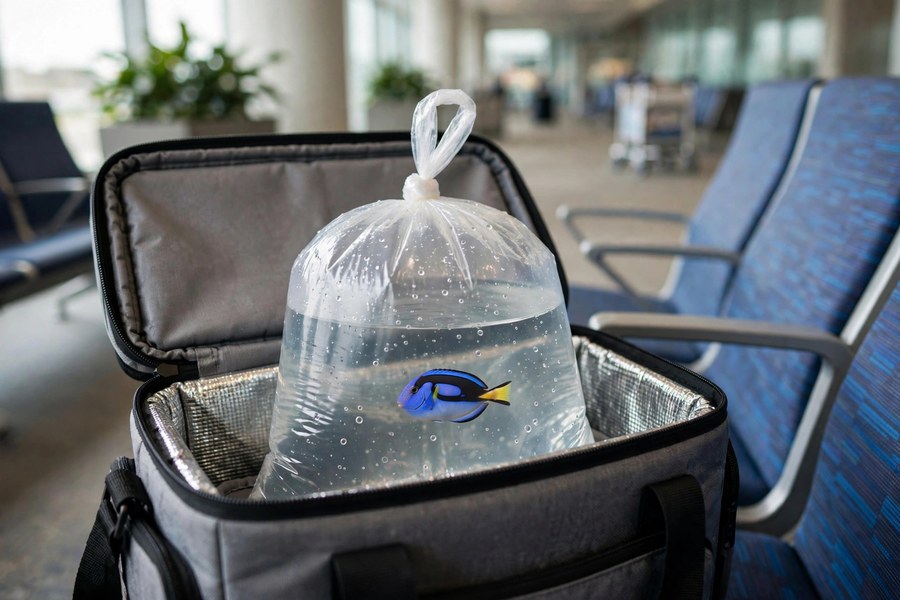
Have you ever visited a fish store while travelling and seen a fish you could not live without? Maybe you are on vacation or a business trip, and you stop into a local shop and find the holy grail fish you have never seen in person before. There is one thing holding you back: you have never brought fish onto a plane and you are nervous to try it. This step-by-step guide shows how to fly fish home successfully — and what to think through first. Note: this article covers air travel within the continental United States, where live fish in water in a clear transparent container are allowed after inspection by a TSA officer.
Key takeaways
Before you fly fish home, have a plan for where you will house your new fish. It is highly recommended that you have a tank already set up and ready to receive the fish once you arrive home. Depending on how long your flight is, the last thing you want is to make it all the way home and then scramble to set up a tank. The most ideal scenario is to have an established quarantine tank ready to house the fish upon arrival — after the extra stress of travel, quarantine is the wise move to avoid introducing disease into your home aquarium.
Before purchasing your fish, think through your logistics for the day of the flight. Use backwards planning: build a timeline starting from your departure time and work backwards to the moment you plan to buy the fish. Allow buffer time, especially if this is your first time flying with fish. Ask yourself:
Make the fish store the last thing you do before the airport. That keeps the fish in the bag for the shortest possible time and limits additional stress. Remember you will be carrying an extra bag — potentially several — filled with water, so moving around will be slightly more difficult than usual.
Tell the employee what you are trying to do. By letting them know you will be travelling a long distance, they may be more careful about how they prepare your fish. Then run through these steps:
In the United States you are only permitted one carry-on bag and one personal item. If your fish bag is your third bag, you will need to check one of your other items. Proceed through the security checkpoint as normal until you arrive at the X-ray machines. Then locate a TSA agent and tell them you have live aquarium fish in the bag that cannot go through the X-ray machines. In our experience, most TSA agents have never dealt with this situation — expect a look of bewilderment or excitement, then a supervisor being flagged down for guidance.
What happens next varies by airport, but here are the three likely reactions once you meet them on the other side of security:
| What TSA may do | What happens |
|---|---|
| Visual inspection | They ask you to open the bag and check each fish is alive and swimming, then send you on your way |
| Water test | They have you open each bag and test the water with a chemical test strip; you re-bag the fish at the checkpoint |
| Enthusiastic crowd | Staff gather around, ask about your new pet, and tell you about their childhood goldfish or their uncle's oscars |
According to the TSA website, "Live fish in water and a clear transparent container are allowed after inspection by the TSA officer." That being said, TSA officers have the final authority on what will or will not be allowed to pass through security.
The hard part is over. Proceed onto the plane as normal and make your way to your seat. In our experience, the best place to put the bag is on the ground, either under the seat in front of you or underneath your legs. Know ahead of time if you are sitting in a bulkhead seat or an exit row — those rows have special restrictions about placing bags on the ground and can make the process more challenging. If that happens, you can put the fish in the overhead storage bin, but it is riskier, as baggage can tumble during takeoff or flight and could cause a fish bag to rupture. Both methods can work.
Once you reach your destination, proceed normally with your preferred acclimation process. Given the extra stress of a longer trip, it is extremely wise to put your new friends into a quarantine tank to reduce the risk of introducing disease into your home aquarium. Let them settle in calm, dim water — ideally in a planted tank with a natural driftwood hardscape from CozyWoodLab, where they can hide, rest and recover in peace.
Safe travels, and happy fish keeping!
Tip: make the fish store your very last stop before the airport, and never open the insulated bag just to peek. Every opening disturbs the fish and destabilises the temperature — the less you check, the calmer the journey.