+

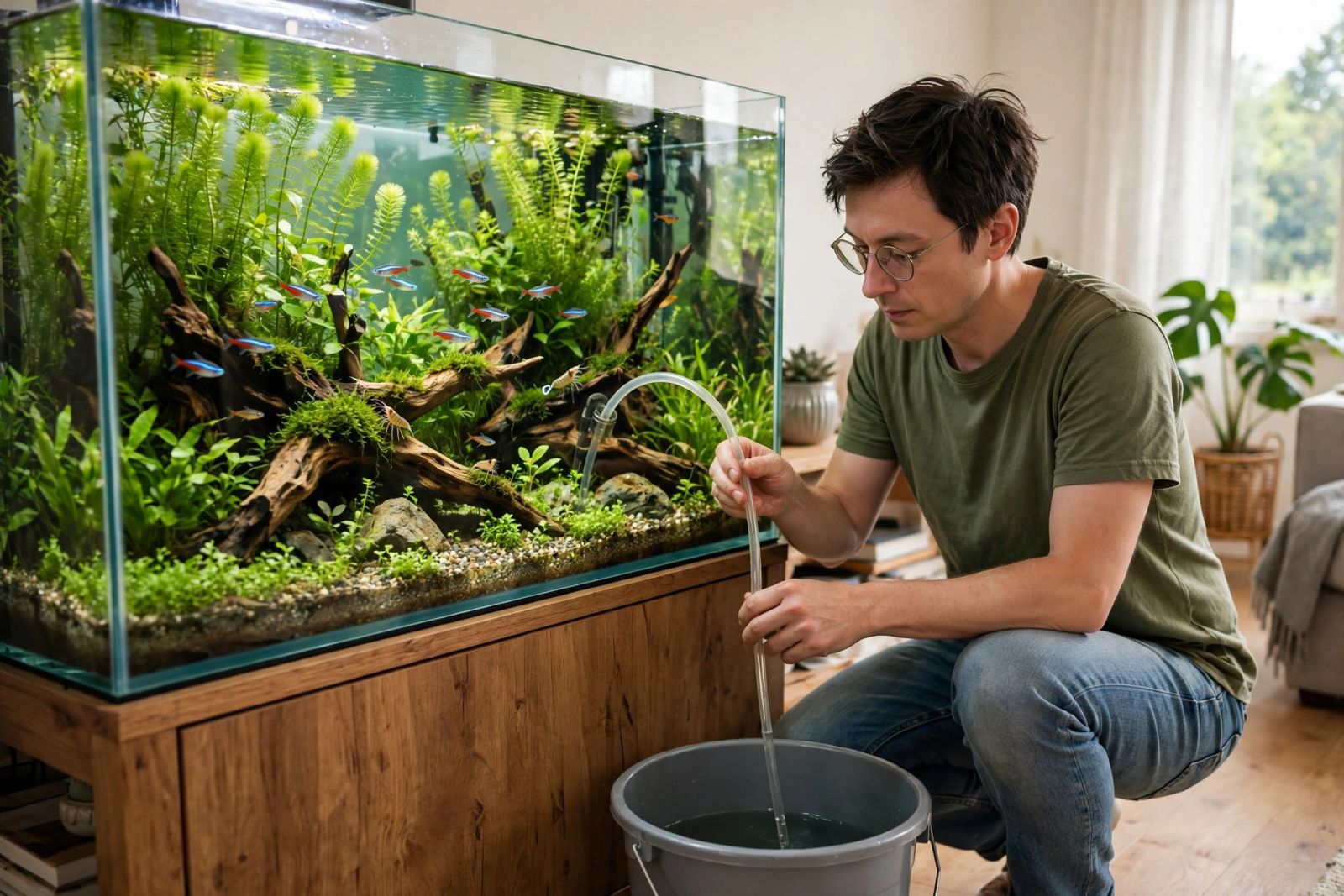
The best moment of the hobby is coming home, sitting in front of the tank, and watching fish drift through swaying plants. Nobody wants to spend all their free time scrubbing glass and hauling water. The good news: with a few smart choices, you can cut maintenance dramatically and keep the tank stable and clear at the same time.
The best moment of the hobby is coming home, sitting in front of the tank, and watching fish drift through swaying plants. Nobody wants to spend all their free time scrubbing glass and hauling water. The good news: with a few smart choices, you can cut maintenance dramatically and keep the tank stable and clear at the same time.
The first maintenance trick is decided before the tank is even filled. A moderate planting of real aquatic plants does more than look beautiful — it absorbs excess nutrients, which stretches the interval between big water changes. Choose equipment that works for you rather than against you, and the weekly workload shrinks on its own.
For the planting, start with species that ask for almost nothing: 10 easy aquarium plants that grow without CO2. And before the tank is stocked at all, it must be cycled: how to cycle a planted aquarium the patient way.
Water changes are the most time-consuming job in the hobby, but they do not have to be. A small submersible pump with a hose drains the tank fast, and while it runs you can clean the glass with a magnetic scraper so the pump carries the debris away. Then move the pump into a bucket of dechlorinated fresh water and pump it straight back in — clean, quick, and no buckets up the stairs.
And forget the monthly mega-change. Swapping 10 to 20 percent every week is far gentler on fish and far steadier for water quality than replacing half the tank once a month. For small volumes, a dedicated siphon tube does double duty: it drains water while vacuuming leftover food and debris out of the substrate.
Tap water chlorine is an invisible killer for fish. Every water change needs a water conditioner — a dechlorinating stabilizer that neutralizes chlorine and heavy metals so fresh water becomes safe water immediately. For which bottle to use and why, see what each type of water conditioner actually does.
| When | What to do | Why it saves time |
|---|---|---|
| Daily (1 minute) | Observe while feeding: filter outflow, fish movement, water clarity | Catches problems when they take minutes to fix |
| Weekly | 10–20% water change, glass scrape, vacuum debris | Steadier than a monthly mega-change |
| Weekly | Trim plants, remove dead leaves | Healthy plants keep pulling nitrate out |
| As needed | Test water, clean filter media in old tank water | A test kit catches drift before it becomes a crisis |
Instead of scrubbing every speck of algae yourself, add a cleanup crew matched to your tank size and stocking: otocinclus, algae-eating shrimp, and similar grazers work around the clock on the fine algae a scraper misses. Just keep their numbers in check so the crew itself does not become a burden, and pair them with good filtration.
One more time-saver: when new substrate or crushed coral arrives coated in fine dust, do not wash it by soaking and swirling in a bucket — the dust just settles back. Rinse it in batches through a coarse fish net under running water, turning it gently, and the dust clears far faster.
Tip: The best maintenance is one minute of observation a day. A problem caught early usually takes three minutes to fix; a problem left to explode can take three hours. Let good tools and good habits carry the load, and you will find fishkeeping really is as relaxing as it looks — especially when the tank itself is a natural, calming scene built around handcrafted driftwood from CozyWoodLab, the kind of view you actually want to sit in front of after work.