+

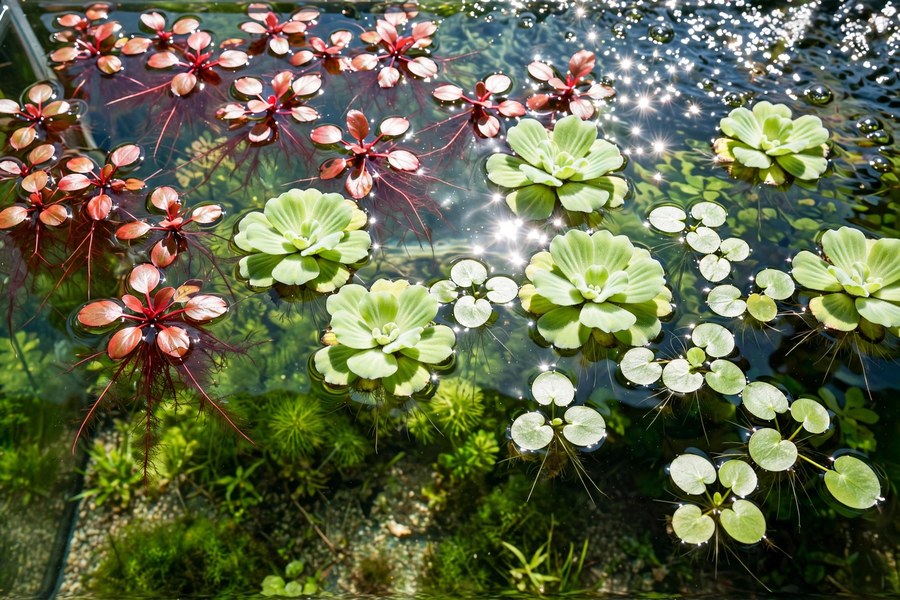
One of the main secrets for getting rid of algae is using floating plants. They soak up excess nutrients in the water, block too much light from reaching other plants, and provide excellent cover for surface dwellers and baby fry. But there is a catch — floating plants multiply out of control. Left alone, they can block all the light from the lower layers and even limit oxygen exchange when the surface is completely covered. Here is an honest review of four floating plants, and how to keep them working for you instead of against you.
Key takeaways
Algae thrives on two things: excess nutrients and excess light. Floating plants attack both at once. Their roots dangle in the water column, pulling nitrates and other dissolved nutrients straight out of the water before algae can use them. Their leaves form a living canopy that shades the water below, cutting the light algae needs to bloom. The result is a tank where algae simply has less to eat and less light to grow in — while your fish gain shelter and your fry gain hiding cover at the surface.
| Plant | Look and growth | Strengths | Watch out for |
|---|---|---|---|
| Dwarf water lettuce | Green, flower-like rosettes; long roots | Beautiful rosette form | Can melt fast if nutrients are low; roots shed |
| Amazon frogbit | Lily-pad leaves, nickel to quarter size; runners | Very hardy; lifts out as one connected mat | Long roots snap during maintenance |
| Red root floaters | Small clumps, red roots; colour shifts with light | Stunning pink-to-red colour; may bloom white flowers | Melts in strong current or dark corners |
| Water sprite | Large, lacy leaves; grows extremely fast | Easiest of all; great for cycling new tanks | Takes over fast; shades slow growers below |
This floating plant is beautiful, with its green, giant flower-like shape. In practice it can be temperamental: a first batch may melt pretty quickly, with the long roots shedding off when nutrients run low. One smart trick is to trim the roots to about three inches so they do not break off during shipping, and give it a 20-gallon high tank with enough nutrients to settle in. Even then, it may stay in smaller 1.5-inch clumps instead of growing into the big, full flower form you fell in love with — a plant that rewards patience and good feeding.
The leaves look like little green lily pads, about the size of a nickel to a quarter. It propagates through runners, which keep all the little plants connected together in a long string — that makes it super easy to lift out an entire mat during tank maintenance. It is also one of the hardiest floating plants you will ever keep, second only to duckweed in resilience. One downside is that the long roots can snap easily during maintenance or water changes, which is why a ring made from airline tubing — a floating corral — is worth building: it keeps the plants together, stops them drifting under the filter outflow, and makes them easy to move when needed.
This is probably the prettiest floating plant you will ever keep. It changes colour depending on how much light it gets: with low light it stays green, but with medium to high light it turns pink or even a deep red, and it might even bloom white flowers under the right conditions. The roots are short, and it grows in clumps that are easy to move around — as long as they are not disturbed too much. Buy from a seller that guarantees no snails and, more importantly, no duckweed. The main problems are that red root floaters tend to melt if the current is too strong, like from an air pump, or if they drift into darker corners of the tank. Keep them in gentle flow and good light, and they are stunning and relatively easy to manage.
This is the easiest floating plant you will ever own. It is widely available and usually sold as a potted stem plant, but when you let it float at the surface, it grows like crazy — because the emersed leaves can absorb CO₂ directly from the air. That makes it the go-to plant for cycling new tanks: it grows super fast and helps remove waste from the water. It produces large, lacy leaves that give off tons of shade, which is great for algae-prone plants like Anubias below. Just stay on top of trimming, or it will easily take over the tank and block out light for slower-growing plants like Pogostemon stellatus and dwarf aquarium lilies. The good news: it is so easy to pull out and transfer to another tank.
The same vigour that makes floating plants great algae fighters is what makes them a maintenance item. Thin the mat weekly, keep a floating corral around the colony so it does not drift over the whole surface, and always leave open water for gas exchange and light to reach the plants below. Paired with a natural driftwood hardscape from CozyWoodLab, a ring of red root floaters above dark wood is one of the prettiest sights in the hobby — and your algae will barely stand a chance.
Tip: build a floating corral from a loop of airline tubing. It keeps frogbit and red root floaters in one place, stops them being pushed underwater by the filter, and makes weekly thinning a two-minute job instead of a chase around the tank.