+

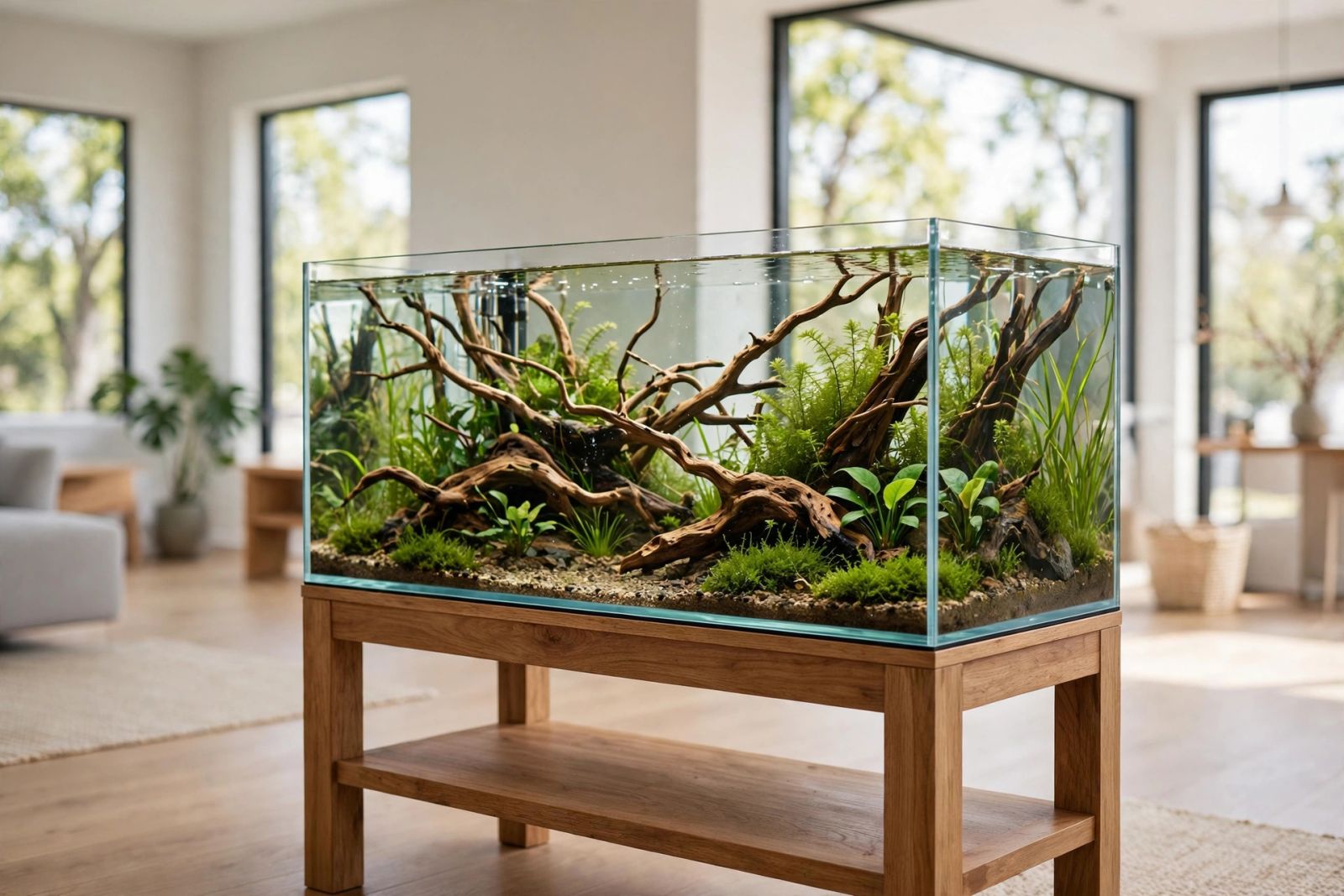
The tank is where fishkeeping starts, and experienced keepers think about it in one phrase: water volume equals buffer. A small tank's water swings wildly with every little disturbance - one overfeeding, one cold snap - while a larger tank's ecosystem absorbs the same shock without blinking. So within your space and budget, choose as much water as you reasonably can.
The tank is where fishkeeping starts, and experienced keepers think about it in one phrase: water volume equals buffer. A small tank's water swings wildly with every little disturbance - one overfeeding, one cold snap - while a larger tank's ecosystem absorbs the same shock without blinking. So within your space and budget, choose as much water as you reasonably can.
There are two honest ways to choose, and both work if you commit to one.
If you already have a dream species in mind, start from its adult size and behavior, then pick the tank and equipment to suit. Fish kept in a tank they outgrow quickly are stressed fish. For example, schooling fish like zebra danios need a long tank to run in, while angelfish need height for their vertical swimming.
If your home sets the limit, measure the spot first, choose a tank that fits it, and then pick species that thrive in that volume. Remember to leave room for equipment - lights, filter, and cable space all count.
| Fish size | Examples | Minimum tank |
|---|---|---|
| Small (under 5 cm) | Tetras, platies | About 30 litres, at least 36 cm long |
| Medium (5-12 cm) | Goldfish, dwarf cichlids, small schooling species | Standard 60-litre tank, 45-60 cm long |
| Large (over 20 cm) | Flowerhorns, arowanas | At least 120 cm long, with real depth and width |
A new tank should be at least 36 cm long (about 30 litres) - below that, water quality and temperature are hard to hold steady. A 45 cm standard tank suits most tropical fish, and anything bigger usually means a custom build on a dedicated cabinet: a big tank can weigh hundreds of kilograms, and a stand that cannot hold it is a safety problem, not a decoration problem.
| Fish type | What they need |
|---|---|
| Schooling fish | (angelfish are the exception here - see below) like tetras and danios swim horizontally in groups: give them a long tank, ideally more than twice as long as it is tall. |
| Territorial fish | such as cichlids and discus need width and visual dividers: a squarer tank gives each fish its own kingdom. |
| Vertical swimmers | such as angelfish and black skirt tetras patrol up and down: a short tank traps them and stunts their confidence - they need height. |
For most keepers, a rectangular tank is the safest default: flow runs cleanly, equipment fits easily, and it suits the majority of popular fish. Square tanks use floor space well and offer a broad water surface; tall tanks suit vertical swimmers; shallow tanks suit ricefish and bottom-dwelling catfish. Round bowls are not recommended - circulation and filtration are poor, the space is cramped, and fish stress easily. If you are unsure about flow in your chosen shape, see how to tell if your aquarium current is too strong.
| Build style | Description |
|---|---|
| Five-panel (rimless) tanks | the classic five-glass build. Zero visual distortion and easy-to-clean corners - the favorite of aquascapers and serious hobbyists. |
| Bent-front tanks | front and sides bent from one sheet. A continuous look with fewer silicone lines, but the bend slightly distorts the view at the corners and traps algae there. |
| Bowed-front tanks | the front bows outward for a magnified, dimensional look - but staring through it for long periods can feel dizzying, and it is unfriendly to photographers. |
| Seamless tanks | high-temperature fused joints, nearly invisible seams, a stunning cut-water effect - and a premium price. |
| Room-divider tanks | very narrow but long. Striking as a partition or entryway feature, but shallow depth limits scaping and demands precise flow design. |
| Material | Strengths | Weaknesses | Best for |
|---|---|---|---|
| Standard glass | Affordable, hardest, most scratch-resistant | Green tint over 8 mm thick | Small tank on a budget |
| Low-iron (ultra-clear) glass | Nearly colorless, best viewing | Scratches more easily, needs careful cleaning | Planted tanks and bright tropical fish |
| Tempered glass | 3-5x impact resistance, breaks into blunt granules | Weak edges, subtle waviness, cannot be drilled after | Safety-conscious homes |
| Acrylic | Extremely tough, half the weight, better insulated | Scratches easily, hazes over years | Huge display tanks, not long-term home use |
With no other constraints, low-iron glass gives the best viewing experience; a small tank on a budget does fine with standard glass; and a home with children or pets may prefer acrylic or tempered glass for safety.
| Avoid | Why |
|---|---|
| Direct sunlight | strong light feeds algae explosions and swings water temperature. If algae does appear, identify your algae type first, then fix the root cause. |
| Next to appliances | moisture and electrics are enemies, and vibration startles fish. |
| On furniture that cannot hold it | water weighs 1 kg per litre - always confirm the support can carry the full, filled weight. |
Rinse the tank with plain water only - never chemical cleaners. Lay down substrate, stone, or driftwood to build the skeleton of the scape. Fill, start the filter, and let the tank cycle - this part cannot be rushed. Add quality beneficial bacteria to help the cycle along, and during the early cycling days, a little fish food gives the bacteria something to feed on. Watch the water's color and smell as it matures.
For the cycling step in detail, see how to cycle a planted aquarium the patient way, and keep it stable afterwards with the lazy keeper's guide to a clean aquarium.
Tip: Choose the tank well, set it up patiently, and the hobby gets much easier from here - and a tank dressed with natural, handcrafted CozyWoodLab driftwood is a tank you will actually want to keep looking at for years.