+

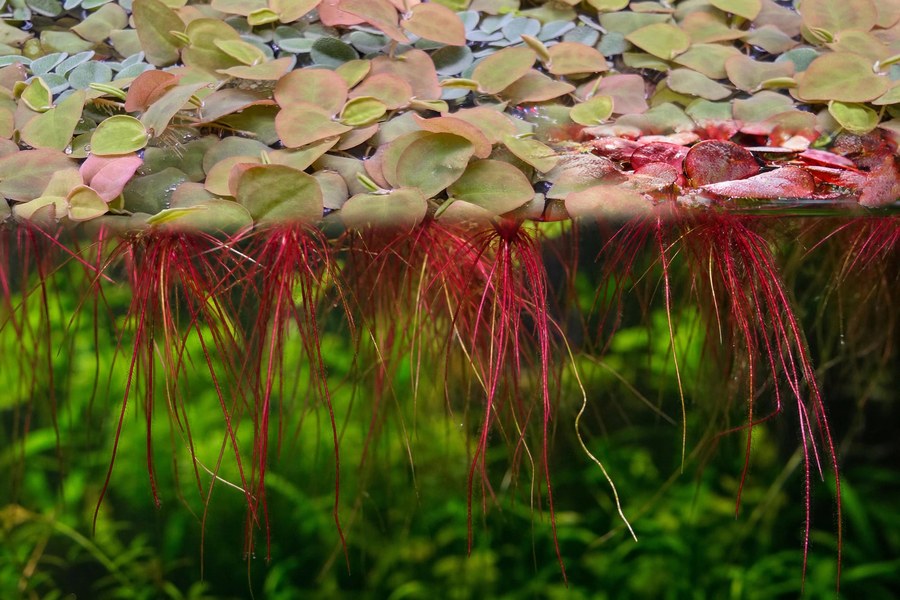
An open-top tank can be perfectly planted below the surface and still look unfinished. The waterline sits bare, the light bounces off empty water, and the whole scape feels like it is missing a ceiling. A handful of Red Root Floaters fixes that in a week — and unlike most floaters, this one earns its place twice over.
From above, round leaves blush from green into pink, rose, and deep purple as the light rises. From the side, vivid red roots dangle into the water like fine threads, casting dappled shade below. Shy fish, shrimp, and fry spend hours in that root jungle. It is two displays for the price of one plant.
| Factor | Target |
|---|---|
| Light | Moderate to high — intensity is what drives the red and purple color |
| CO2 | Not required — floating leaves breathe room air directly |
| Surface flow | Calm and gentle — the single most important factor |
| Temperature | 20–28°C (68–82°F), comfortable in any standard tropical tank |
| Growth | Moderate to fast; new plants split off on their own |
| Feeding | A little liquid fertilizer in the water column; feeds from water, not substrate |
It sits happily alongside other easy species: 10 easy aquarium plants that grow without CO2, and it is a natural shade plant for a betta tank — see best live plants for a betta tank.
Red Root Floaters evolved in still, quiet water, and they have no patience for a wet top surface. A strong filter outlet blasting across the waterline, or condensation dripping from a tight glass lid, will turn healthy leaves into rotting mush within days.
The fix is simple: baffle the filter return so the surface stays calm — a lily pipe or a small sponge over the outlet does the job — and either run the tank open-top or leave a gap under the lid so condensation cannot rain down on the leaves. Get this right and the plant is genuinely easy. If your flow still feels wrong, see how to tell if your aquarium current is too strong.
Because floaters sit at the surface with unlimited access to air, they grow fast and pull dissolved nutrients straight out of the water column — the same nutrients algae feeds on. A healthy floater canopy will not cure every outbreak on its own, but it quietly removes a large share of the fuel behind them, and it shades the tank just enough to slow algae further.
If algae is already established, identify it first: identify your algae type first, then fix the root cause. And because floaters feed only from the water column, they show nutrient problems early — yellow leaves? Your aquarium plant is telling you what it needs explains the iron clues in particular.
| Problem | Most likely cause | Fix |
|---|---|---|
| Leaves melting or rotting | Wet leaf tops | Calm the surface, fix the lid; new growth comes in clean |
| Leaves stay flat green | Light too low for color | Raise intensity; blush returns in a week or two |
| Plants below are struggling | Canopy too thick, shading everything out | Scoop out a handful every week or two |
| New arrivals look mostly green | Days in a dark shipping box faded the color | Normal — color returns in 1–2 weeks under strong light |
Tip: Red Root Floater is one of the easiest upgrades in the hobby: calm the surface, turn up the light, and let it do its thing. Pair that living canopy with natural hardscape below — the kind of handcrafted driftwood CozyWoodLab builds for planted tanks — and even a simple rimless tank starts to feel like a complete little world, top to bottom.