+

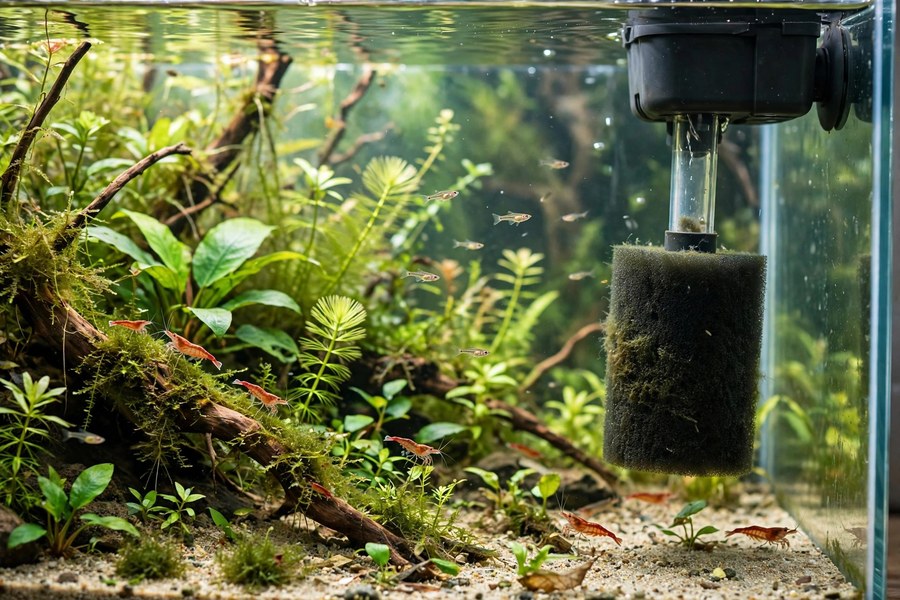
A pre-filter sponge is the cheapest upgrade in the hobby, and also one of the most quietly transformative: a simple sponge slipped over a filter intake that protects fry, shrimp and your filter itself, adds biological filtration, and even becomes a grazing spot. Aquarium Co-Op did not invent the idea, but it championed it early, and the reasons it caught on are worth knowing before you fit one.
Key takeaways
A pre-filter does exactly what its name promises: it stands guard at the filter intake, preventing anything and everything from entering the filter body. That includes the obvious valuables — precious fry, fragile shrimplets and snails, both the wanted kind and the pests — and also the creatures further down the food chain: scuds, seed shrimp and the countless microorganisms that make up a living ecosystem. Protecting them was the original reason hobbyists hacked together DIY intake covers long before ready-made sponges existed.
The protection runs both ways. Not every creature sucked into a filter survives, and those that perish inside can decay into an unhealthy ammonia spike, undermining the very job filtration is supposed to do. Keeping small life out of the filter therefore protects water quality as directly as it protects the animals themselves. If you have ever lost fry to a filter intake, this single, inexpensive part is the fix — and our guide to why adult fish eat fry explains the other, behavioural half of keeping babies alive.
Early experience taught one clear lesson: porous, coarse sponges outperform finer grades because they clog less frequently and maintain stronger flow. That means less frequent servicing, steadier circulation and a filter that keeps doing its job between cleanings instead of slowly choking. The sponge also protects the filter itself, since debris is caught at the intake rather than grinding through the impeller and media inside.
Fitting is straightforward because sponges are made in several sizes — like gym socks, there is one to fit almost any intake — with intake adapters available for popular hang-on-back filters and canister filters. Measure the intake diameter, choose the snuggest sponge that still slides on without forcing, and check that flow stays strong after fitting; a sponge that strangles flow has defeated its own purpose.
As water passes through a pre-filter, the sponge becomes seasoned: an ideal surface for beneficial bacteria to colonise, so you gain biological filtration as well as mechanical filtration from the same small part. That extra bacterial capacity is genuinely useful in a stocked tank, and it arrives without any extra equipment, noise or power draw. It also makes the sponge a living surface in its own right, which is why invertebrates and nano fish are often seen grazing on it throughout the day.
That grazing habit is a small delight worth watching for: shrimp picking over the sponge's surface, tiny fish nibbling at the biofilm, all in the open where you can see them. A natural CozyWoodLab driftwood scape pairs well with this setup, since wood and sponge together give grazing animals shaded surfaces and shelter at every level of the tank. And because the sponge sits outside the filter, rinsing it is a two-minute job that leaves the main filter media — and its bacteria — undisturbed, which is exactly how a cycled, stable tank should be maintained.
| Benefit | How it helps | Who notices it most |
|---|---|---|
| Protects fry and shrimplets | Stops small life entering the filter | Breeders and shrimp keepers |
| Protects the filter | Catches debris at the intake; less clogging | Anyone tired of frequent filter servicing |
| Adds biological filtration | Bacteria colonise the seasoned sponge | Stocked and heavily fed tanks |
| Creates a grazing surface | Biofilm buffet on the sponge exterior | Shrimp, snails and nano fish |
Tip: choose a coarse sponge, not a fine one. Fine sponges look more thorough but clog fast and choke flow; a porous sponge protects just as well while keeping circulation — and your maintenance schedule — easy.