+

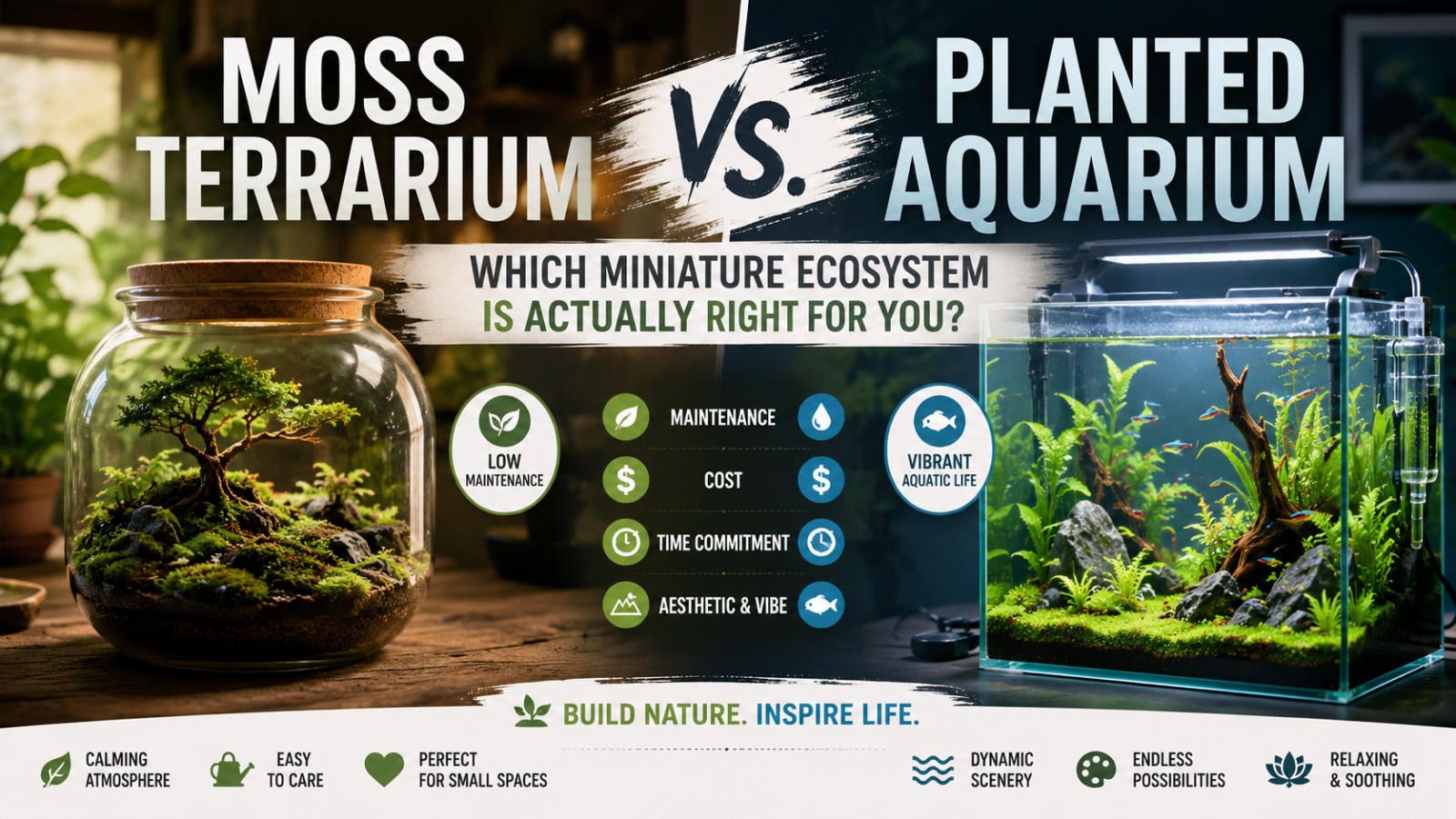
Both promise a small living world on your desk — but a moss terrarium and a planted aquarium are very different commitments. One is a sealed green landscape you mist a few times a week. The other is a living water system with fish, filters, and weekly water changes. Picking the wrong one is how a beautiful purchase becomes a chore.
A moss terrarium is a glass container holding live moss, soil, and usually stone or a small piece of wood. Closed terrariums recycle their own moisture, so the moss stays damp with very little input from you. There are no fish inside, and nothing needs feeding.
A planted aquarium is a tank of water holding aquatic plants, hardscape, and usually fish or shrimp. Plants photosynthesize underwater, fish produce waste, bacteria convert that waste, and you manage the balance with filtration and water changes. It is a real ecosystem, not a decoration that happens to be wet.
Terrarium care is measured in minutes per week. Mist lightly a few times a week, keep it in bright indirect light, and trim any brown patch before it spreads. That is most of the job, and a well-kept moss terrarium can stay green for years — see how long a moss terrarium actually lasts for the habits that make the difference.
Aquarium care is measured in a weekly routine. Expect a partial water change every week, glass cleaning, plant trimming, filter checks, and feeding every day. Before any fish go in, the tank must be cycled so beneficial bacteria can handle ammonia — our guide to cycling a planted aquarium the patient way explains why skipping this step causes most beginner losses.
| Moss terrarium | Planted aquarium | |
|---|---|---|
| Weekly time | About 5–10 minutes | About 30–60 minutes, plus daily feeding |
| Water changes | None — light misting only | Partial change every week |
| Equipment | Glass container, light from the room | Tank, filter, heater (for tropical fish), light |
| Animals | None | Fish, shrimp, or snails |
| Biggest risk | Direct sun scorching the moss, or months of total neglect | Uncycled water, overfeeding, or algae blooms |
| Typical lifespan | Years with misting and indirect light | Years with weekly care; plants and fish keep growing |
A terrarium's cost is mostly upfront: the container, the planting, and the hardscape. After that, running costs are close to zero. A handmade piece costs more than a kit because someone composed it by hand — what handmade vs mass-produced terrariums actually cost breaks down exactly where that price gap comes from.
An aquarium's cost keeps going: food, water conditioner, replacement filter media, plants, and occasionally new fish. The tank itself is only the start. Budget for the routine, not just the setup, or the tank will quietly stall.
Terrariums fit almost anywhere a plant would: a desk, a shelf, a bedside table. They need bright indirect light and must stay out of direct sun, because glass concentrates heat and scorches moss fast.
Aquariums need a strong, level stand, a power point, and room to work around the tank for water changes. They also need a light strong enough for plants — ordinary room light is not enough underwater. If you have no spare floor or desk space, or you move house often, that alone can settle the choice.
Terrariums are the safer pick around curious pets and small children: nothing to feed, nothing that escapes, and no open water. Still check plant safety if a cat chews greenery — see whether moss terrariums are safe around cats and dogs.
Aquariums are wonderful for children who want to watch living animals, but they need an adult owning the water changes and feeding. Open water, heaters, and glass also mean more supervision for very young kids.
Choose the moss terrarium if you want calm, green, and low-effort; if your schedule is unpredictable; if you rent a small space; or if you want a finished piece of living decor rather than a hobby.
Choose the planted aquarium if you want movement and animals; if you enjoy a weekly routine and learning water chemistry; or if you already keep fish and want plants to complete the tank. Start with easy plants that need no injected CO2 — 10 easy aquarium plants that grow without CO2 is a good first planting list.
Tip: Still torn? Start with the terrarium. It teaches you light, moisture, and patience for almost no running cost — and if you catch the aquascaping bug, a planted tank built around natural driftwood hardscape will still be waiting.