+

Two tabs open. One is a $35 terrarium kit: glass jar, bag of pebbles, some moss sealed in plastic, assembly required. The other is a handcrafted microlandscape at around $180 — tiny hills, natural stone, live moss, already built and thriving. Same category, wildly different prices. So what exactly is the gap made of? Let’s be specific, because "it’s handmade" by itself is not an answer.
| Mass-produced kit (~$35) | Handmade microlandscape (~$180) | |
|---|---|---|
| Who builds it | You assemble it from a factory template | Designed and built individually by a maker |
| Plants | Often preserved, dyed, or outright plastic | Living moss, planted by hand |
| Hardscape | Molded resin, repeated across thousands of units | Natural stone, chosen curve by curve |
| Uniqueness | Thousands come out exactly the same | No two ever match exactly |
| What you get | A box of parts | A finished living scene, already thriving |
| Longevity | Looks finished for a month, then fades | Keeps living with light care, still intentional next winter |
A mass-produced kit is a factory template. You assemble it. The plants are often preserved, dyed, or outright plastic. The hardscape is molded resin, repeated exactly across thousands of units.
A genuine handmade piece is designed and built individually: someone chose that particular curve of stone, placed the miniature bridge by hand, layered the substrate so the hills read as hills, and planted living moss into it. That is a few hours of skilled work per piece — and that labour is the largest single part of the price gap.
Factory kits win this one — thousands come out exactly the same. With handmade pieces built from natural stone and live moss, no two ever match exactly. Stone comes out differently, moss grows how it wants. That is the same reason a hand-thrown mug never matches its neighbor.
If you want a piece nobody else has on their desk, the variation is the point, not a defect. Honest sellers tell you pieces differ slightly — that language is a sign of the real thing, not a warning.
Kits often ship preserved or dyed moss that will never grow — it looks finished for a month, then it is a jar of fading parts. A handmade piece arrives complete and keeps living: with light care it still looks intentional next winter. Some even include working water features — a small engineered system circulating real water over real moss — which is a build, not a kit.
Longevity also comes down to care, not just construction. A handmade terrarium still needs the right light and misting routine — how long a moss terrarium actually lasts covers the habits that keep one green for years, whichever kind you buy.
Not everything needs to be handcrafted, and it is worth saying so. A weekend project with your kid? A $30 kit is perfect — building it is the point. Experimenting and expecting to kill your first attempt? Also fine. Buy the kit for the experience.
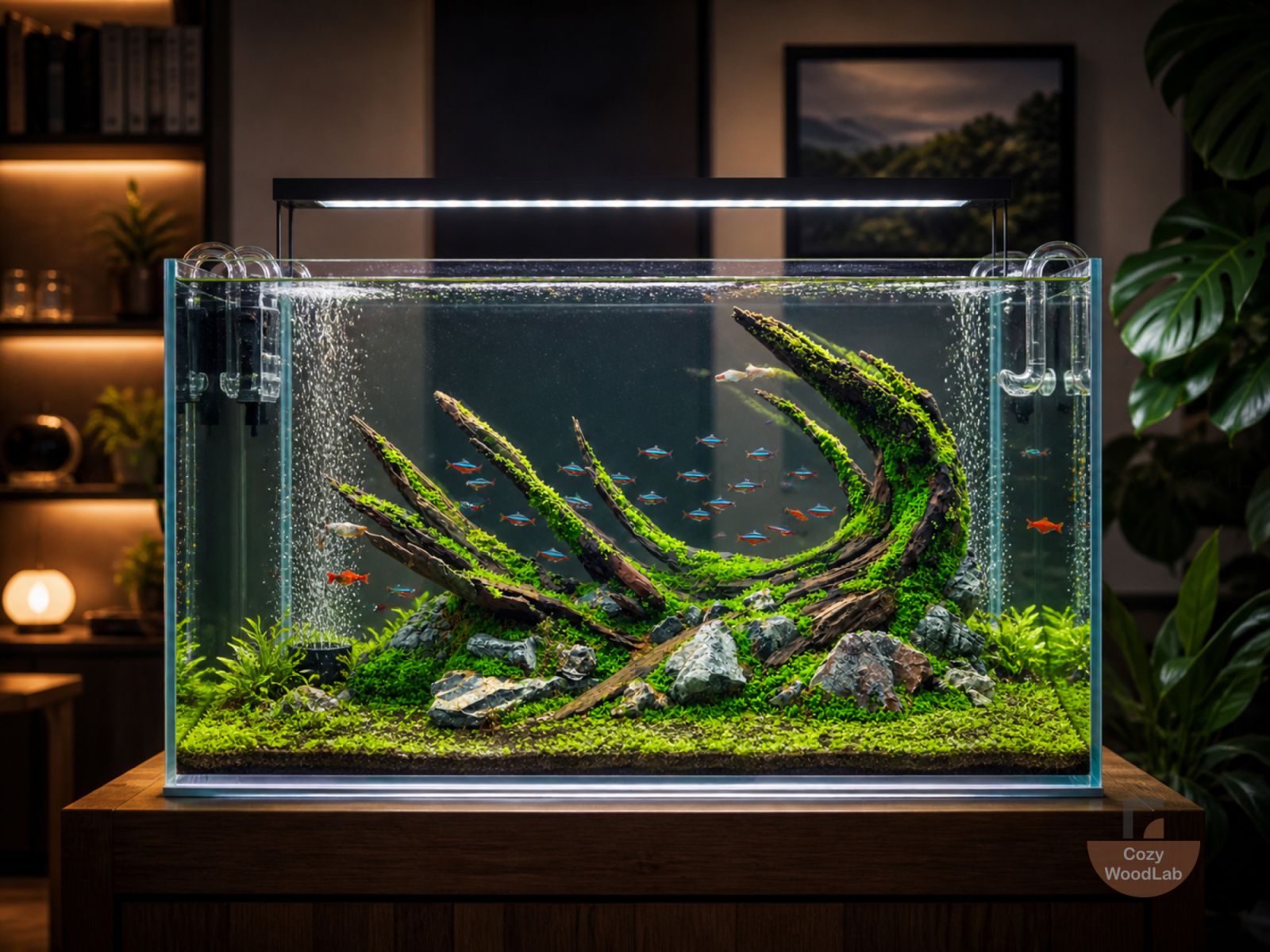
Buy handmade when you want something that arrives complete, keeps living, and still stops people mid-conversation a year from now. If you are still deciding between a terrarium and a full aquarium setup, moss terrarium vs planted aquarium: which miniature ecosystem is actually right for you compares the two commitments honestly.
The same honesty test applies to pets in the house: before a terrarium goes near a curious cat or dog, check whether moss terrariums are actually safe around cats and dogs.
Tip: The price gap is not arbitrary. You are choosing between a box of parts and a finished living scene someone actually composed. Both are fine choices — as long as you know which one you are buying.