+

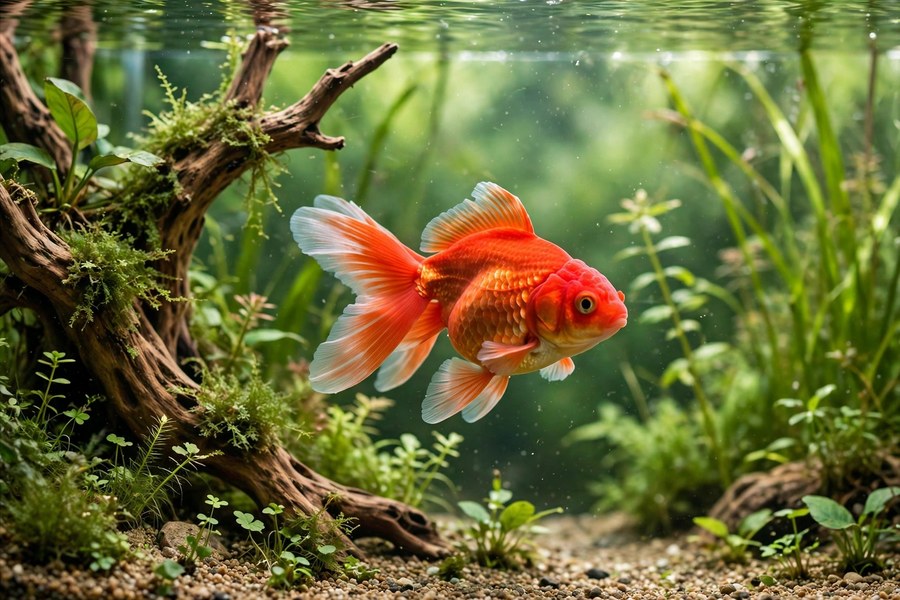
A fish floating head-down, rolling onto its side, or stuck on the bottom looks alarming — and it is a sign worth acting on fast. In most cases the cause is not a contagious disease but a buoyancy problem called swim bladder disorder, and many cases improve with simple home care. Here is how to tell what is happening, what to do first, and when to call in medication or a vet.
Key takeaways
Inside every bony fish sits a gas-filled organ called the swim bladder, which works like a submarine's ballast tank. By adjusting the gas inside it, the fish holds its depth without constant swimming. When the bladder cannot inflate or deflate properly, buoyancy control fails.
| What you see | What it usually means |
|---|---|
| Floating head-up, tail-down | Mild buoyancy imbalance, often digestive |
| Floating head-down, tail-up | Classic swim bladder presentation |
| Rolling onto its side | More severe loss of control |
| Sinking to the bottom, unable to rise | Bladder under-inflated, or the fish is exhausted |
Many keepers assume it is contagious, but it is not an infection in itself — it is a symptom with several possible causes, and the treatment depends on which one. That is why the first step is always observation, not medicine.
The gut sits right against the swim bladder, so a bloated intestine presses on it directly. Overfeeding, dry pellets that swell after being eaten, or slow digestion in cold water can all create gas and pressure. This is the classic cause of swim bladder trouble in goldfish, especially short-bodied fancy varieties.
Changes in droppings often appear before buoyancy does — our guide to what fish waste reveals about health helps you read those early signs.
Short-bodied goldfish were bred for round bodies that compress their internal organs, leaving little room for a normally functioning bladder. These fish are high-risk for life, and their episodes are managed rather than cured outright.
Raised ammonia or nitrite can inflame internal organs and disrupt metabolism, indirectly wrecking buoyancy control. Regular testing and a conditioner routine — see our water conditioner guide — are the unglamorous foundation of prevention.
Bacterial or internal parasite infections can inflame the bladder itself or surrounding tissue, causing long-term buoyancy loss. Suspect this when buoyancy problems come with other signs: poor appetite, darkened colour, or clamped or damaged fins. This kind of case needs real treatment, not just fasting.
Move the fish to a quiet hospital or isolation tank first, so treatment does not stress tankmates or disrupt the main tank. Then work through the steps in order, giving each one time to work.
Stop feeding for 2–3 days, lower the water level so the fish spends less energy reaching the surface, and keep the water clean and gently warmed to 26–28°C. For most digestive cases, fasting alone is the treatment — the gut empties, pressure on the bladder eases, and buoyancy returns.
Once the fast ends and the fish looks stable, offer a cooked, shelled pea — its fibre helps clear a blockage. Peas are a laxative aid, not a medicine, and they do not suit every fish: carnivorous and insect-eating species cannot digest them, so skip this step for those fish.
Dissolve about 1 tablespoon of Epsom salt (magnesium sulfate) per 3–4 litres of water in a separate container and bathe the fish for 10–15 minutes. This can relieve constipation and help the fish pass gas, after which it should be returned gently to its tank. Treat it as temporary support, not a cure for the bladder itself.
Warning: never use ordinary table salt as a substitute, and never dose human antibiotics into a tank. Both can do more harm than the original problem — if the fish needs medicine, use a product made for fish and follow its label or a vet's advice.
If 3–5 days of fasting, peas, and salt baths bring no improvement, or if you see infection signs such as severe lethargy, reddened skin, or fin rot, the cause is probably beyond digestion. At that point a fish antibiotic used exactly as labelled — or better, advice from an aquatic vet — is the right move. Acting early matters: buoyancy problems caught in the first days usually resolve, while weeks of waiting turn a fixable problem into a permanent one.
Swim bladder trouble looks dramatic, but most cases trace back to something ordinary — too much food, poor water, or a body shape that needs managing. Find the cause, treat the fish calmly, and tighten the daily routine that prevents a repeat. At CozyWoodLab, we think of aquariums as living systems: stable water, natural hardscape, and plants that do some of the work for you are what keep fish upright and thriving.