+

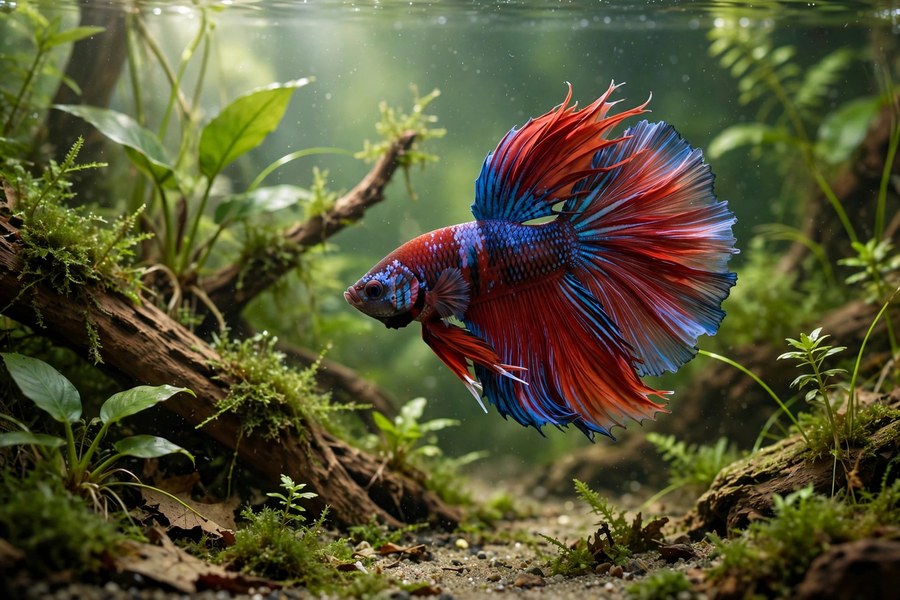
Few fish reward good care as visibly as a betta. Give one warm, stable water and room to spread those fins, and a fish that looked dull in a store cup can turn into the brightest thing in your living room. This guide covers the setup, feeding, and daily habits that keep bettas healthy for their full three-to-five-year lifespan.
Key takeaways
Siamese fighting fish (Betta splendens) come from the shallow rice paddies and slow streams of Thailand. Wild bettas are modest green-brown fish, but generations of breeding have produced more than 70 domestic varieties in nearly every colour imaginable. Most grow to 5–10 cm and live 3–5 years with good care.
Varieties are usually named for tail shape, so the table below is the fastest way to tell them apart. Whatever variety you choose, the care is the same — what changes is how much room those fins need to open fully.
| Variety | Tail | Look |
|---|---|---|
| Halfmoon | Opens to a 180° fan | The classic show fish, richest colours |
| Crowntail | Spiky, crown-like rays | Bold, dramatic silhouette |
| Rosetail | Layered, ruffled like a rose | The most elaborate finnage |
| Veiltail | Long, flowing veil | Graceful, the most common variety |
| Delta and crowntail mixes | A blend of shapes | Widely available, varied personalities |
The most persistent myth in fishkeeping is that bettas thrive in tiny cups because they can breathe air. Bettas do have a labyrinth organ that lets them gulp air at the surface, which helps them survive low-oxygen water. It does not protect them from ammonia.
In a small container, waste builds up fast, and ammonia and nitrite burn delicate fins, causing clamped fins or fin rot. A tank of at least 5–10 litres gives waste room to dilute and gives the fish room to swim and display. The difference in colour and fin carriage is usually visible within weeks.
| Setup point | What to aim for |
|---|---|
| Tank size | At least 5–10 litres, with open space at the surface for breathing |
| Temperature | Steady 24–29°C with a heater |
| Water chemistry | pH 6.5–7.5, soft water, always treated with dechlorinator |
| Filtration | Gentle flow — small hang-on-back with adjustable flow or a sponge filter |
| Planting and shelter | Easy plants such as Java fern or a Marimo moss ball, plus a cave or decoration as a retreat |
A filter matters even for bettas, because it hosts the nitrifying bacteria that keep water safe. Choose a small hang-on-back filter with adjustable flow or a gentle sponge filter, and baffle the outlet with a piece of filter sponge if the current pushes your betta around. If your betta is being blown sideways, the flow is too strong — see our guide to reading water flow to judge it.
Bettas are tropical fish: hold the temperature steady at 24–29°C with a heater, especially in winter, when a cold tank makes them sluggish and vulnerable. Aim for pH 6.5–7.5 and soft water, and always treat tap water with dechlorinator before it touches the tank. Test ammonia, nitrite, and nitrate regularly so problems are caught before fins show them.
A layer of gravel or aquasoil planted with easy plants such as Java fern or a Marimo moss ball gives a betta oxygen, shade, and places to rest. Add a cave or ceramic decoration as a territory of its own — a betta with a retreat is a calmer, bolder fish. Pair the planting with soft, betta-safe plants and skip anything sharp that could tear fins.
Bettas are carnivores, and one small meal a day is plenty — offer only what the fish finishes in 2–3 minutes. High-protein betta pellets or frozen bloodworms make a good staple, with frozen brine shrimp or daphnia as an occasional treat. Overfeeding is the fastest way to foul a small tank, so uneaten food should be removed, not left to rot.
Pair feeding discipline with a weekly 20–30% water change and a quick gravel clean. Change only part of the water each time: a full change shocks the fish and resets the filter bacteria you worked to grow.
Myth one is the cup: small containers swing in temperature, accumulate waste, and have no filtration, which is why cup-kept bettas fade early. Myth two is that bettas do not need water changes: regular partial changes are the single biggest factor in a long betta life. Stability beats perfection — avoid large, sudden swings in temperature or chemistry.
Tip: leave open space at the water surface so your betta can breathe easily, and use a mirror only for a minute or two of display — prolonged flaring is stressful, not exercise.
Bettas are genuinely hardy fish, but hardy is not the same as indifferent. Set up a warm, planted, gently filtered tank, feed lightly, and change water weekly, and your betta will show you the difference — fuller fins, brighter colour, and years of personality. At CozyWoodLab, we build our aquarium decor around that same idea: natural driftwood and plants that make a tank feel like a real habitat, not just a container.