+

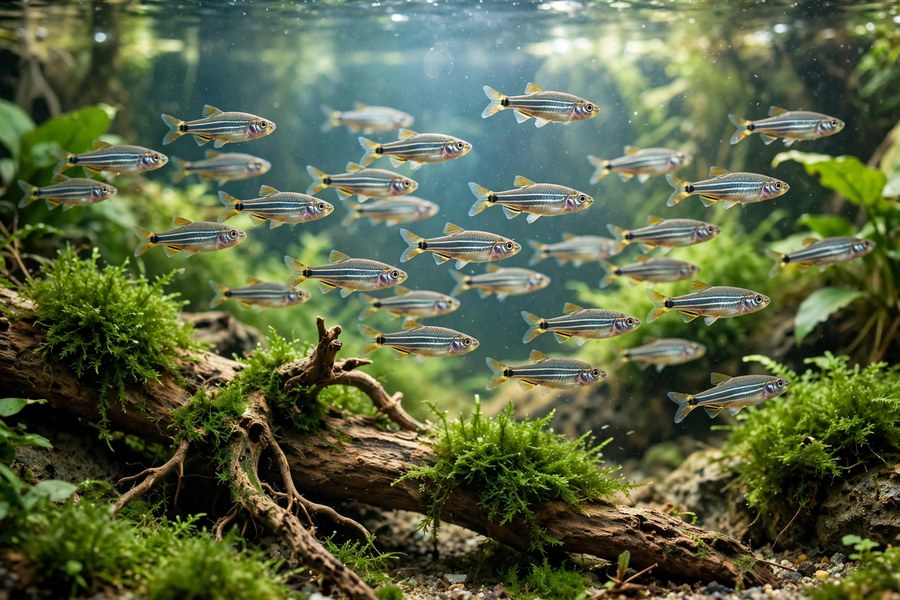
Fast, striped, and nearly indestructible — the zebra danio is one of the best first fish you can own. Scientists even use them in genetics and medical research because they breed so readily. But "easy" does not mean "throw two in a bowl." Give them a school, a long tank, and stable water, and they repay you with the most energetic display in freshwater fishkeeping.
Zebra danios (Danio rerio) are torpedo-shaped speedsters, about 5–6 cm (2–2.5 inches) fully grown, originally from slow streams, ponds, and rice paddies in northern India. Beyond the classic wild type with its bold horizontal black stripes, breeders have developed striking varieties, all with the same basic care:
| Variety | Look | Note |
|---|---|---|
| Classic wild type | Silver body, bold black horizontal stripes | The hardiest choice for beginners |
| Longfin danio | Flowing, longer fins | More delicate — needs steadier water |
| Leopard danio | Golden body with black spots | Same care as the classic type |
| Albino danio | Pink-white body | Same care as the classic type |
| GloFish danio | Glows red, green, or yellow under blue light | Needs special lighting to show its colours |
Danios are small but fast — they need room to run. A long tank beats a tall one every time for this species, because they swim horizontally all day. Decorate with plants like Java moss to mimic their natural habitat, but keep plenty of open swimming space in the middle of the tank.
A sponge filter gives gentle flow without blasting them, and medium light is plenty unless you are showing off GloFish under special lighting. Change 10–25% of the water weekly to keep things stable — a simple routine like the one in the lazy keeper's guide to a clean aquarium is more than enough for danios.
| Parameter | Target |
|---|---|
| Tank length | At least 60 cm (24 inches) |
| Temperature | 18–24°C (no heater needed in most rooms) |
| pH | 6.0–8.0 |
| Hardness | Soft to hard water all fine |
| Water changes | 10–25% weekly |
| Lifespan | 2–5 years with good care |
Before adding danios to a brand-new tank, make sure the tank is cycled first — how to cycle a planted aquarium the patient way explains the process step by step. And always treat tap water before it goes in: what each type of water conditioner actually does helps you pick the right bottle instead of guessing.
Danios are omnivores. Tropical flakes or nano pellets work as the staple, supplemented with frozen bloodworms, baby brine shrimp, or freeze-dried treats. Feed small amounts 2–3 times a day so every fish gets its share — they are aggressive eaters and will out-swim slower fish to the food. A balanced diet keeps their stripes sharp.
This is the one thing you cannot skip: keep at least 5–6 together, and more is better. A lone danio or a pair gets anxious, darts around nervously, and may nip fins. In a proper school, they transform — synchronized swimming across the tank is genuinely therapeutic to watch.
They also act as "dither fish": their confidence calms shyer tank mates, which is why experienced keepers often add a danio school to a community tank. One practical note: they jump, so keep a lid on the tank at all times.
Peaceful but hyperactive, so match their energy. Good tank mates include other danios, rainbowfish, livebearers like guppies and swordtails, small tetras, barbs, and corydoras catfish. Plant the tank with easy, hardy species — 10 easy aquarium plants that grow without CO2 gives you a planting list that suits a danio tank perfectly.
Avoid slow fish like angelfish and bettas, which get chased or outcompeted at feeding time. Also avoid anything tiny enough to be mistaken for food, and large predators that see danios as lunch.
Danios mature fast, and a single spawning can produce 100+ eggs — perfect for your first breeding project. Pick a slim male and a round-bellied female, feed heavily with live or high-protein food, and watch for the male chasing the female.
The critical trick: they eat their own eggs instantly. Line the breeding tank floor with thick Java moss or large marbles so eggs fall into the gaps where parents cannot reach them. A slightly cool water change can trigger spawning, mimicking monsoon rains. Once spawning is done, remove all adults immediately, and feed the fry infusoria or powdered fry food for the first two weeks before switching to baby brine shrimp.
Tip: If a danio starts hiding, loses colour, or stops schooling, check water first before assuming disease — stable, clean water fixes more danio problems than any medication. For reading subtler signs, see sleeping or sick? How to read your fish's nighttime behavior.