+

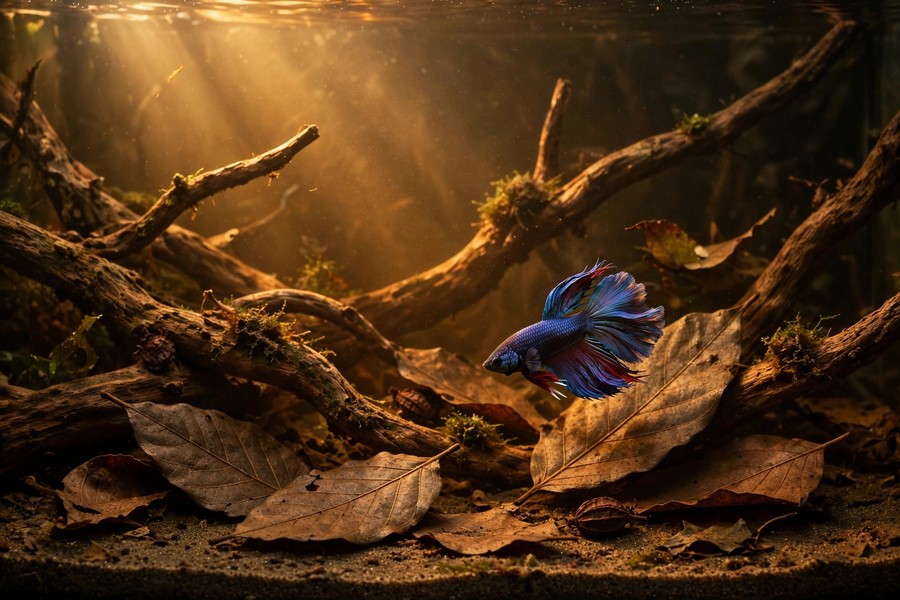
Scroll through aquarium photos online and you will spot them everywhere: brown leaves resting on the substrate, water tinted a warm tea colour, fish drifting through a miniature forest floor. Those are usually Indian almond leaves, and they are far more than decoration. Here is why keepers use leaves, what tannins actually do, and how to collect your own safely.
Key takeaways
The first reason is visual: leaves instantly make a tank look like a real stretch of riverbed rather than a display case. But many keepers use them for functional purposes too — as food for shrimp, which graze the softening leaf, or as a spawning area for fish and shrimp that prefer to lay eggs on a natural surface.
Some leaves also act as a gentle natural remedy. Indian almond leaves in particular release minerals that can be beneficial to fish, and they are widely used as a natural support for bettas — helping with fin rot and white spot, among other common complaints.
Hundreds of leaves are used around the world, but the most common in the hobby are Indian almond leaves, guava leaves, mangrove leaves and oak leaves. Each brings a slightly different mix of tannins and minerals, and all of them soften and break down slowly in water.
Stinging nettles deserve a mention too: they are a natural fertiliser, releasing nutrients that help plants grow without a bottled product, and they provide minerals that can improve fish and shrimp colour and health. If nettles grow in your garden, they can be a very cheap alternative to bought botanicals.
| Leaf / botanical | Main benefits | Best for |
|---|---|---|
| Indian almond leaf | Tannins, minerals, gentle natural remedy | Bettas, shrimp, blackwater tanks |
| Guava / mangrove / oak leaves | Tannins and natural riverbed look | Biotope and natural-style tanks |
| Stinging nettle | Natural fertiliser, minerals for colour and health | Planted tanks, shrimp tanks |
Tannins are natural substances released by many botanicals, and leaves are one of the most prominent sources. They tint the water brown and slightly murky — and that tea colour is entirely intentional in a blackwater tank.
The tint reduces line of sight through the water, which helps fish feel more comfortable and less exposed. In turn, fish show more of their natural behaviour: bolder colours, calmer movement, and better spawning behaviour.
The hobby has travelled a long way from fake plants, coloured gravel and treasure-chest ornaments. Live plants were a huge step forward — and leaves and botanicals are the next one, introducing a whole new element to fishkeeping.
There is now a dedicated niche for this style, often called blackwater or natural aquariums, practised by keepers sometimes known as biotopiers. The idea is simple: take the elements of a real habitat — fallen leaves, pods, wood, soft tinted water — and recreate them in the tank, so the fish live in something close to home.
That natural approach pairs beautifully with soft, safe planting. Our guide to live plants for betta tanks shows how gentle foliage and leaf litter together create the calm, shaded world a betta actually prefers, while aquarium landscaping tips explain how layout changes fish behaviour for the better.
You can buy leaves online, but you can also collect them yourself — with care. The most important step is research: know exactly what type of leaf you are putting in, since some leaves can contain dangerous chemicals.
Many leaves have been tried and tested by other keepers, but this is still a young area of the hobby and not everything has been proven safe. If you want to experiment with an untested leaf, trial it first in a separate container of water, away from your fish, before it ever enters a real tank.
Boiling matters because leaves found outdoors may carry animal waste or pollutants from their surroundings. A good boil, plus a clean collection spot, turns a free handful of leaves into a safe, natural addition — and a driftwood centrepiece from CozyWoodLab completes the forest-floor look they were made for.
Tip: do not be alarmed when the water turns tea-coloured after adding leaves — that is the tannins working. If you prefer clearer water, use fewer leaves or change water more often, but never strip tannins out with chemicals that could stress your fish.