+

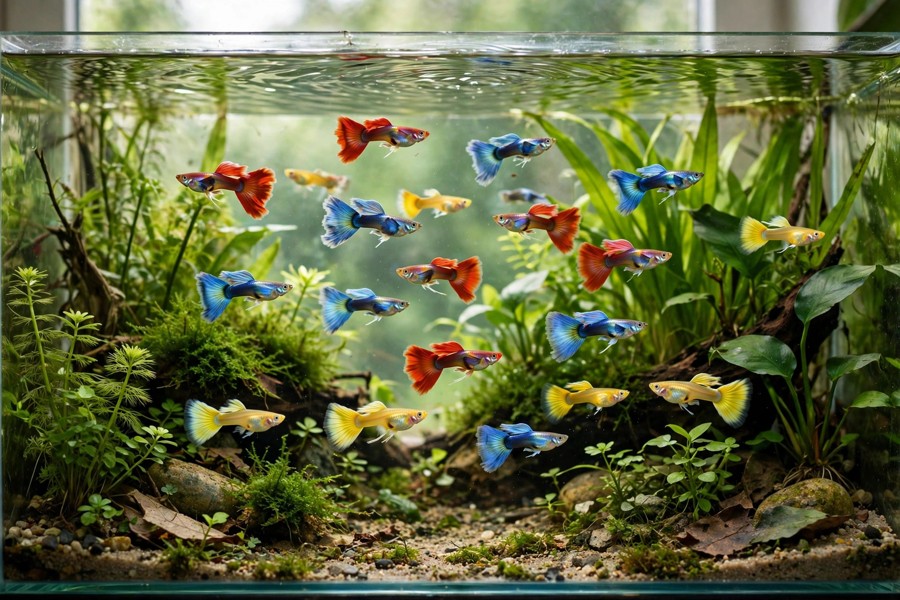
Guppies are the classic beginner fish — colourful, peaceful and famously easy to breed. Easy, though, does not mean effortless. Modern fancy guppies carry the side effects of decades of selective breeding, and a few habits make the difference between a thriving colony and a tank that slowly fades. Here are the ten things that matter most.
Key takeaways
Most keepers are told that flakes are enough. They are a decent base — manufacturers blend ingredients to cover the basics — but they do not cover everything. Adding live foods, frozen foods and different dry foods brings visible results quickly: stronger colour, livelier behaviour and better breeding condition. Variety is the cheapest upgrade a guppy tank can get.
Wild guppies were famously tough, but the fancy strains in shops today have been line-bred for colour and fin shape for years. That inbreeding has weakened many lines, leaving bent spines, lower fertility and weaker immunity in some fish. The practical fix is simple: buy from a reliable breeder who outcrosses and mixes bloodlines, rather than picking the flashiest fish from a crowded shop tank.
Guppies rarely cause trouble themselves — the risk runs the other direction. Avoid nippy or aggressive species such as many barbs and cichlids, and stick with peaceful company like mollies, tetras, cherry shrimp or bristlenose plecos. A guppy-only tank is also a perfectly good choice: it stays colourful, active and free of fin-nipping drama.
Like all fish, guppies can carry dropsy, internal worms or simply arrive stressed from transport. Never mix pet-store water into your tank, and quarantine every newcomer before it joins the main display. Treating with a deworming medication early, even when it feels like an extra expense, prevents weeks of losses later.
Guppies are livebearers, and a single female can deliver a new batch of fry roughly every three to four weeks. That is the charm of the species — and the planning problem.
| Breeding fact | Number |
|---|---|
| Gestation between batches | 22–25 days |
| Fry per batch | 30–50 |
| Recommended male-to-female ratio | 1 male to 2 females |
| Minimum starting group | One trio (1 male, 2 females) |
Keep males and females together in a small tank and you will be overrun within a few months. The 1-to-2 ratio also protects females from constant male attention. If you want colour without the population explosion, keep males only.
Guppies are tropical fish, so they need warm, filtered, stable water. A heater and a filter are non-negotiable, and a sponge filter is an excellent default choice. Beginners can relax about pH and hardness at first — keeping ammonia low matters far more than chasing perfect numbers.
| Parameter | Target |
|---|---|
| Temperature | 72–84°F (22–28°C) |
| Heater | Yes — tropical species |
| Filter | Sponge filter recommended |
| Small tanks under 10 gallons | Males only, to avoid breeding overload |
Live plants do real work in a guppy tank: they absorb nitrates, support the nitrogen cycle and recreate the sheltered, natural environment guppies evolved in. They also give fry somewhere to hide, which raises survival rates. Water wisteria, Java moss, guppy grass and water sprite are all proven, fast-growing choices that double as natural filtration.
Almost any filter type can work, but the intake is the danger zone for fry. Hang-on-back and canister filters can pull tiny babies in unless you fit a sponge cover over the intake. Sponge filters avoid the problem entirely — they are gentle, fry-safe and cheap — which is why they remain the go-to for guppy keepers. For more on fry survival in community tanks, see our guide on why adult fish eat fry.
Guppies typically live one to three years. Warmer water speeds up their metabolism, which shortens life, so a guppy that fades after a year or so may simply be old: older males swim more slowly, drop their fins and lose energy. That is normal ageing. Losing several fish at once, however, is a warning sign — check for illness and water problems immediately.
This is the single best tip in the hobby: inspect guppies closely before money changes hands. Skip skinny, bloated or listless fish, ask the shop to feed them, and pick the most active, eager eaters. Do not rescue sick fish out of sympathy — a healthy start makes the whole experience easier, and your tank will thank you for it.
Done right, a guppy tank is a living, moving display that practically runs itself — and a planted setup with driftwood and soft greenery from CozyWoodLab gives those bright tails the backdrop they deserve.
Tip: if you are buying your first guppies, ask the seller to feed the tank in front of you. The fish that race to the food are almost always the healthiest ones in the group — pick those, and leave the shy, skinny ones behind.