+

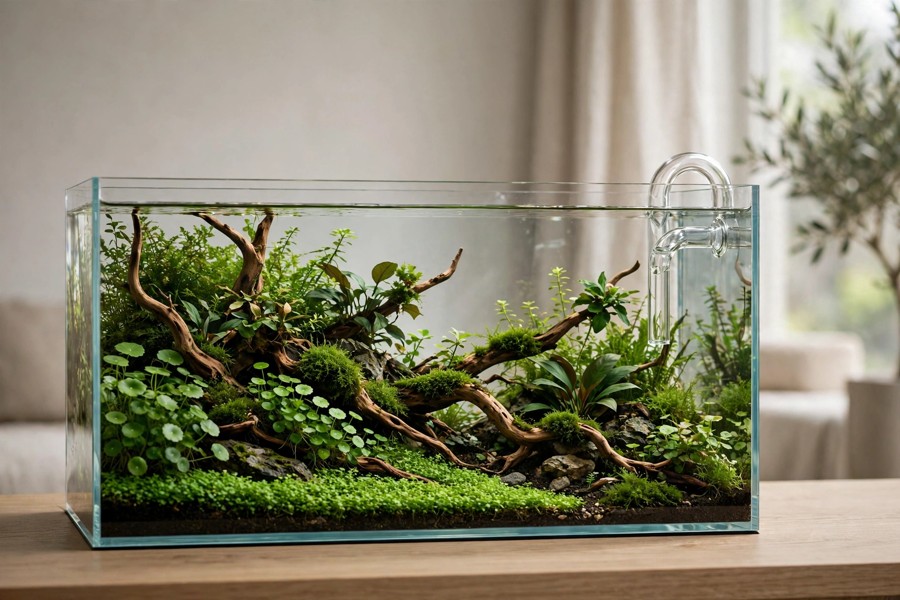
You can spend weeks perfecting a hardscape, dialling in the substrate and coaxing plants into growth — then step back and realise the first thing your eye lands on is a chunk of bright-green plastic plumbing. Swapping it for glass lily pipes is the fastest way to make a tank look like living art instead of standard equipment.
Key takeaways
Standard filter plumbing is designed to be functional, not beautiful. Glass lily pipes flip that priority without giving up function — and in several areas they actually work better than the plastic they replace.
| Factor | Plastic filter tubing | Glass lily pipe |
|---|---|---|
| Visibility | Bulky, distracting, often bright colours | Nearly invisible once submerged |
| Flow pattern | Blasts directly, can disturb substrate | Flared outflow spreads current gently |
| Surface film | No built-in handling | Skimmer actively pulls biofilm away |
| Fragility | Durable, hard to break | Requires careful handling |
| Aesthetic fit | Reads as equipment | Reads as part of the aquascape |
Clear borosilicate glass practically bends into the water column once submerged. With no dark tubes cutting across the glass, the eye finally rests where it should — on the wood, the stone and the plants. The whole setup instantly reads cleaner, more professional and more premium, which is exactly why competition aquascapers treat glass plumbing as standard, not luxury.
That rainbow-coloured film on the water surface is biofilm, built up from proteins in fish food and decaying plant matter. It looks harmless, but it blocks LED light from reaching the plants and chokes off oxygen exchange at the surface. A lily pipe set with a floating surface skimmer sits right at the waterline, automatically adjusting as the level changes, and continuously draws that protein layer down into the canister filter. Rotate the bottom section to fine-tune how much surface water gets skimmed, and the surface stays like a polished mirror.
Spray bars blast water like a firehose, stressing fish and blowing substrate around. The lily outflow flares at the end — the shape that gives it its name — creating a gentle, rolling current that pushes CO₂ and nutrients evenly across the scape. For a demanding high-light carpet, that smooth, distributed flow down to the substrate is genuinely critical for even growth, and it keeps the whole tank calmer for its inhabitants.
Lily pipes match your canister filter's tubing, so measure the inside diameter of your existing hose before ordering. A snug fit means no leaks and no slipping.
| Pipe size | Fits filter tubing | Best for |
|---|---|---|
| 10 mm | Mini/nano-size filter stems | Small tanks, nano setups |
| 13 mm | 1/2" (12/16 mm) tubing | Standard mid-size canister filters |
| 17 mm | 5/8" (16/22 mm) tubing | Larger tanks, higher-flow filters |
Glass rewards a little patience. Forcing cold, stiff plastic hose onto a glass pipe is the classic way to snap one in your hands, so dip the tubing end in a mug of hot water for about 30 seconds first — the plastic softens and slides on effortlessly.
Watch the water line, too. As water evaporates, the floating skimmer drops with it, and if it falls too far it starts gulping air with an annoying slurping sound. Regular top-offs keep it silent. As a bonus, raising the inflow slightly above the waterline at night turns it into an aerator, adding surface movement and clearing surface scum while the lights are off.
Glass shows algae, so occasional cleaning is part of the deal. A flexible spring-wire pipe brush scrubs the inside back to crystal clear, or soak the pipes in heavily diluted bleach for an hour, rinse thoroughly and treat with water conditioner before reinstalling. The intake slots keep adult fish and shrimp out effectively; if you actively breed dwarf shrimp, a pre-filter sponge over the bottom intake slots is a smart extra precaution.
You do not need to rebuild your tank to make it look high-end. Pairing a clean glass outflow with a natural driftwood hardscape from CozyWoodLab is a weekend project that instantly elevates the whole room — and lets your scape finally do the talking.
Tip: always soften stiff filter tubing in hot water for about 30 seconds before pushing it onto glass. It is a ten-second habit that saves a broken pipe, a flooded cabinet and a ruined weekend.