+

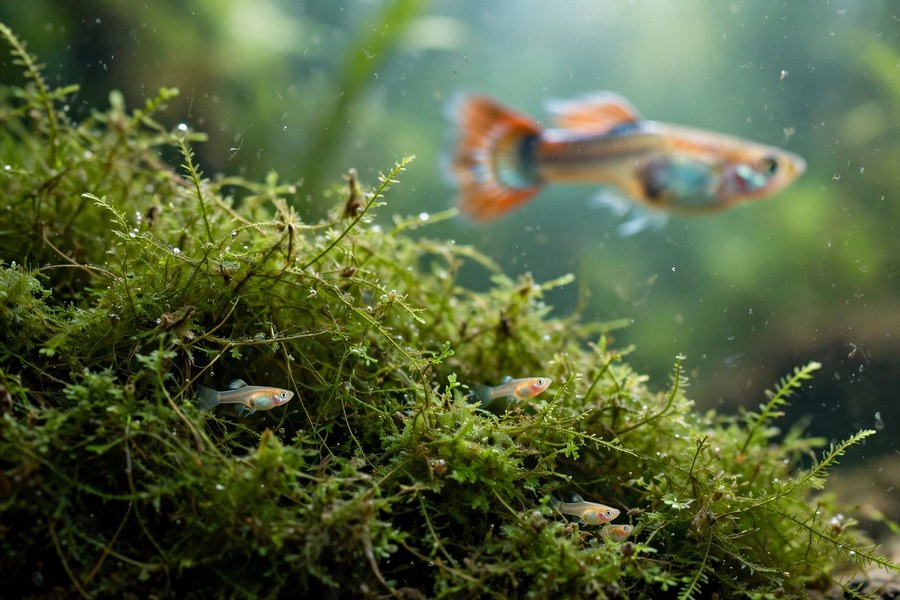
Every breeder remembers the first time. One evening there are tiny fry darting through the plants; the next morning half of them are gone, and by the day after, the tank looks like nothing ever happened. No disease, no disaster — just an empty corner where the babies were. It feels like a failure. It is not. In the wild, most fry do not survive, and adult fish eating fry is one of the oldest population controls in nature. Understanding why it happens is what lets you stop it.
Every breeder remembers the first time. One evening there are tiny fry darting through the plants; the next morning half of them are gone, and by the day after, the tank looks like nothing ever happened. No disease, no disaster — just an empty corner where the babies were.
It feels like a failure. It is not. In the wild, most fry do not survive, and adult fish eating fry is one of the oldest population controls in nature. Understanding why it happens is what lets you stop it.
| Reason | What happens | What helps |
|---|---|---|
| 1. Survival of the strongest | Parents eat weakest fry, keep energy for strongest offspring | Separate fry early; do not rely on parents to choose |
| 2. Stress | Poor water, overcrowding, no hiding places, constant disturbance | Stable water, space, dense cover, calm routine |
| 3. Hunger and exhaustion | Underfed or drained parents treat fry as easy protein | Feed adults generously during breeding |
| 4. Inexperience | First-time parents mistake fry for food | Separate first spawns; expect better later batches |
| 5. Crowd control | Too many fry compete for resources in a small tank | Breeding tank or breeder box, fewer fry per space |
When food, space, or clean water is limited, parents may eat the weakest or slowest-developing fry and keep their energy for the strongest offspring. Harsh as it sounds, it is a strategy that protects the genes most likely to survive.
Poor water quality, overcrowding, a lack of hiding places, or constant disturbance puts adult fish on edge — and stressed fish are far more likely to snap at anything small that moves, including their own young. Keeping water stable with a simple routine — the lazy keeper’s guide to a clean aquarium — already removes one major trigger.
Spawning takes a toll. A parent that is underfed, or drained after producing eggs, may treat fry as an easy source of protein — especially in a tank where food supply is unreliable.
First-time parents are clumsy. Some species mistake fry for food while trying to move or guard them, and species with weak parenting instincts may simply never learn the difference.
In a small tank, too many fry means fierce competition for resources. Eating some of them is the population’s blunt way of restoring balance.
| Fish | Why they eat fry |
|---|---|
| Goldfish | Strongly omnivorous with almost no parenting instinct — eggs and fry are simply food to them. |
| Guppies | Fry are tiny, and adult males in particular will snap them up by mistake or design. |
| Oscars and bettas | Aggressive opportunists; stress makes them far more likely to turn on fry. |
| Many cichlids | Some are devoted parents, but others will eat part of a spawn when defending territory. |
Even the better parents — some African cichlids and discus, for example — cannot be trusted completely. Separation is the only guarantee.
The same egg-eating instinct shows up in the easiest beginner breeder too: zebra danio care explains why danio parents must be removed immediately after spawning.
Newborn fry are tiny, slow, and defenseless. On their own they get stable water, food sized for their mouths, and a calm environment where their immune systems can develop. In a community tank, their food is stolen by adults before it ever reaches them, and every shadow overhead is a threat. A separate space removes all of that at once — and it lets you actually watch their health day by day.
The safest method. Move the parents to a spawning tank before birth, then return the adults to the main tank afterward and let the fry grow up alone in the nursery tank.
Short on space? A hang-on or in-tank breeder box uses the main tank’s mature, stable water while keeping adults and fry physically apart.
If you do not separate at all, the tank needs thick cover: dense moss, floating plants, and porous rock or wood with small crevices. Fry that can vanish into cover survive at far higher rates — this is where a well-scaped tank with natural driftwood, like the pieces CozyWoodLab crafts by hand, quietly does double duty as a nursery.
For the cover itself, plant easy species that fry can hide in: 10 easy aquarium plants that grow without CO2, and for a betta tank specifically, best live plants for a betta tank.
During breeding, raise both the quality and the frequency of adult feeding — good live or frozen foods, fed well. A well-fed parent has far less reason to look at its fry as lunch.
Tip: Fish eating their young is not cruelty and it is not your fault. It is nature running an old program inside a glass box — and in that box, you get to intervene. Separate in time, feed generously, and give the babies somewhere to hide, and the next batch stands a real chance of growing up.