+

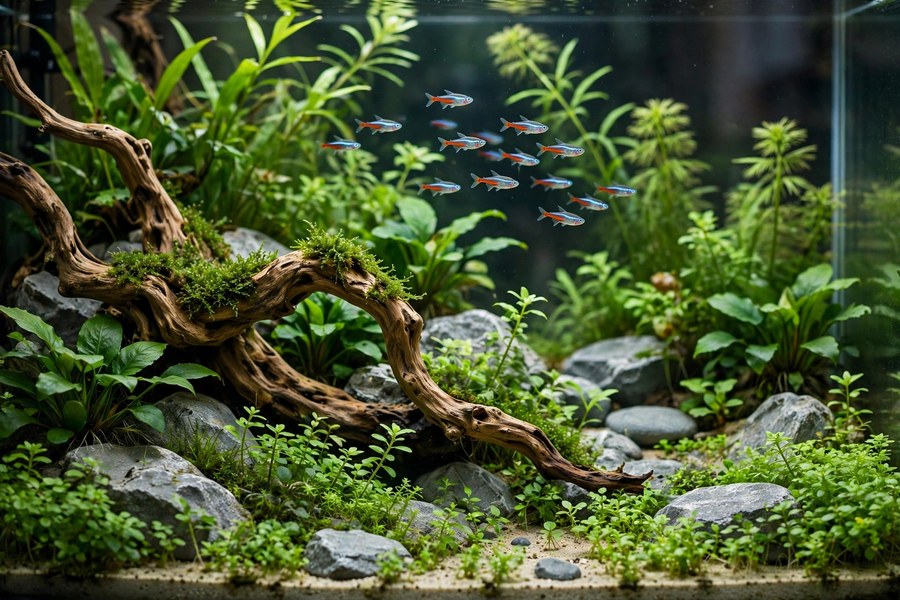
Most people start keeping fish just to watch a few fish swim around a glass box — and then one day they notice that a tank with a real landscape inside feels completely different. Aquascaping is not only about looks: for the fish, a well-built layout is a more comfortable home, with shelter, territories and places to explore. The good news is that a beautiful first scape does not require expensive gear or expert skill, just a clear style, a simple plan, and patience.
Key takeaways
Knowing the main styles saves you from buying random rocks and wood and hoping they somehow work together. Each style has its own logic, difficulty and maintenance load.
| Style | Look and idea | Best for beginners? |
|---|---|---|
| Planted tank | Plants as the main feature, fish as the finishing touch | Yes — the most forgiving starting point |
| Nature Aquarium | A slice of real landscape — mountains, forest, river — built with wood, stone and layered plants | Yes, with low-demand plants |
| Dutch | A flower-garden look built purely from many plant species, colours and heights | Later — trimming is frequent |
| Iwagumi | Minimalist stone layout following the three-stone rule: main stone, supporting stone, sacrificial stone | Yes, if you like minimalism |
| Biotope | Recreates one real habitat — its water, substrate and native species | Later — research-heavy, but rewarding |
If you are still deciding between a planted tank and something wilder, our aquarium landscaping tips explain how layout choices change fish behaviour for the better.
Theme and style. Browse photos and videos, or visit a local fish store, until one style genuinely excites you — you will live with this tank for years. Fish first, or at least early. A shy species needs caves and dense planting, a schooling species needs open water, and the layout should serve the fish, not just the camera. Tank size. A medium tank of about two feet is the sweet spot for beginners: big enough to scape properly, small enough to manage. A sketch. Draw the layout on paper first — where the wood goes, where the stones sit, where fish will swim — and you will avoid the classic mistake of buying twice as much hardscape as the tank can hold.
Substrate is not decoration; it feeds plants, hosts bacteria and shapes water chemistry. Aquasoil is the easiest choice for a first planted tank because it arrives complete with nutrients. Clean sand looks beautiful but carries no nutrition, so you will need root tabs or liquid fertiliser. Plain gravel suits fish-only setups well but is a poor choice for rooted plants. For a first scape, aquasoil simply removes a whole layer of worry.
Wood and stone create the skeleton everything else hangs on. Choose driftwood with natural shape and branching, and combine several pieces to suggest roots or fallen timber; soak or boil new wood first so it sinks and releases excess tannins instead of staining your water yellow. For stone, pick one type with matching colour and texture — dragon stone, green dragon stone and black Seiryu-style stone are all popular — and arrange it with the golden ratio or a simple three-point composition rather than lining up equal-sized rocks in a row. Anchor large stones safely, with a foam pad underneath to spread the weight, so a bump from a fish or a tremor cannot topple them. A handcrafted driftwood centrepiece, like the bonsai-style pieces in CozyWoodLab's driftwood collection, can carry a whole scape on its own — see how driftwood bonsai turns a single tree into an underwater landscape.
Layering plants by height is what turns a pile of plants into a landscape. Low creeping species such as Monte Carlo or dwarf hairgrass form the foreground carpet. Medium plants — red ludwigia, green rotala, moss tied to wood — bridge the middle. Tall, fast growers like red butterfly weed or giant vallisneria hide equipment and fill the background. A few red plants scattered among the green lift the whole picture, but restraint beats excess: too many colours at once looks busy, not lush. Plant with tweezers, pushing roots gently into the substrate, and accept that new plants often float free at first — patience fixes it.
Two things beginners forget: fish need open water, and you need access. Keep the centre or lower front of the tank open so fish can swim freely, arrange wood and plants so the eye travels smoothly across the tank, and never pack a scape so tightly that water changes, trimming and cleaning become a wrestling match. The right tools help too — choosing aquascaping scissors makes trimming a pleasure instead of a chore.
Equipment showing everywhere. Filters, heaters and air stones all matter, but tucking them behind background plants or wood instantly cleans up the picture; canister and hang-on-back filters are popular for exactly this reason. Skipping the cycle. A new tank needs two to four weeks to mature before fish move in, and a steady weekly one-third water change after that is the most reliable habit you can build. Plants versus algae. Trim fast growers regularly so they do not shade everything below, keep light and nutrients balanced, and let algae eaters such as shrimp and snails help with cleanup duty.
A first scape does not need to be perfect — it needs to be yours, and it will evolve as you learn. Enjoy watching it grow, adjust it slowly, and sooner or later you will catch yourself sitting on the sofa, staring at a little underwater world you built with your own hands. That feeling is genuinely addictive.
Tip: photograph your tank from the front every two weeks. You will spot balance problems, overgrown corners and algae patches far earlier in a photo than with your nose against the glass every day.