+

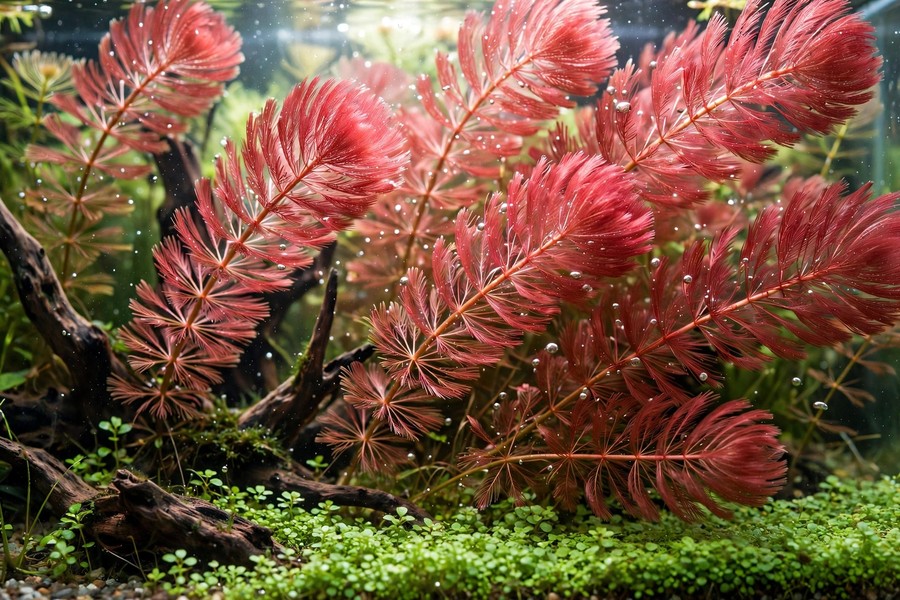
Every aquascaper knows the moment: the greens are lush, the hardscape is placed, but the layout still feels flat. What it usually needs is a splash of red — and red plants have a reputation for being fussy, expensive, and quick to melt. Myrio Red Foxtail breaks that pattern: a feathery stem plant that brings genuine red tones without demanding an expert-level setup.
Key takeaways
| Factor | Requirement |
|---|---|
| Light | Moderate to high — light is the main trigger for red colour |
| Temperature | 65–82°F (18–28°C) |
| CO₂ | Optional — boosts growth rate and colour depth, but not required |
| Placement | Midground to background |
| Growth rate | Moderate to fast |
| Propagation | Stem cuttings |
| Difficulty | Easy to moderate |
Most red aquarium plants have broad, flat leaves. Myrio is different: its foliage is incredibly fine and feathery, flowing gently with the filter current like an underwater fern. A thick bush of it softens the hard lines of rocks and driftwood, adds movement and depth, and makes bright green foreground plants look even better by contrast. Pair it with a dependable low-tech plant such as Bucephalandra and the red stands out even more.
When the plant is photosynthesizing well, the fine leaves also catch tiny oxygen bubbles beautifully — a visible sign that the tank is running in good health.
This is where many beginners lose heart. The bundle arrives green instead of the vivid red in the photos, and after a few days it sheds a few leaves. Both are completely normal. Shipping in the dark strips some colour, and the stems need a short adjustment period to your water. Give it about a week in stable conditions, and fresh growth under your lights will come in with that signature reddish tint.
The same patience applies to most new plants: if leaves yellow or melt after planting, check our guide to why aquarium plant leaves turn yellow before assuming the plant is dying.
Myrio earns its place beyond looks. Growing at a moderate-to-fast pace, it pulls excess nutrients straight from the water column, constantly out-competing algae for food. For shrimp keepers it is a genuine asset: the soft, dense plumes form a natural nursery where baby shrimp and fry can hide and graze safely away from larger fish.
| Question | Answer |
|---|---|
| Do I need CO₂? | No. It grows well in low-tech setups; CO₂ speeds growth and deepens colour. |
| How do I propagate it? | Snip the top of a mature stem and replant the cutting next to the mother stem. |
| Why did mine arrive green? | Normal shipping stress. About a week under stable light brings back the red in new growth. |
| Is it safe for shrimp? | Yes — the dense foliage actively shelters baby shrimp and fry. |
Tip: plant stems individually, never as a tight bundle. Light-starved lower leaves drop off, and a clump that looks full on day one turns leggy within weeks.
Adding red to a tank does not have to be a frustrating battle with a demanding plant. Give a feathery stem plant a little time to settle, enough light to colour up, and room to bush out — and it will transform the whole feel of the layout. At CozyWoodLab, where driftwood is the backbone of so many scapes, a soft red curtain behind the wood is one of the simplest ways to make a tank look finished.