+

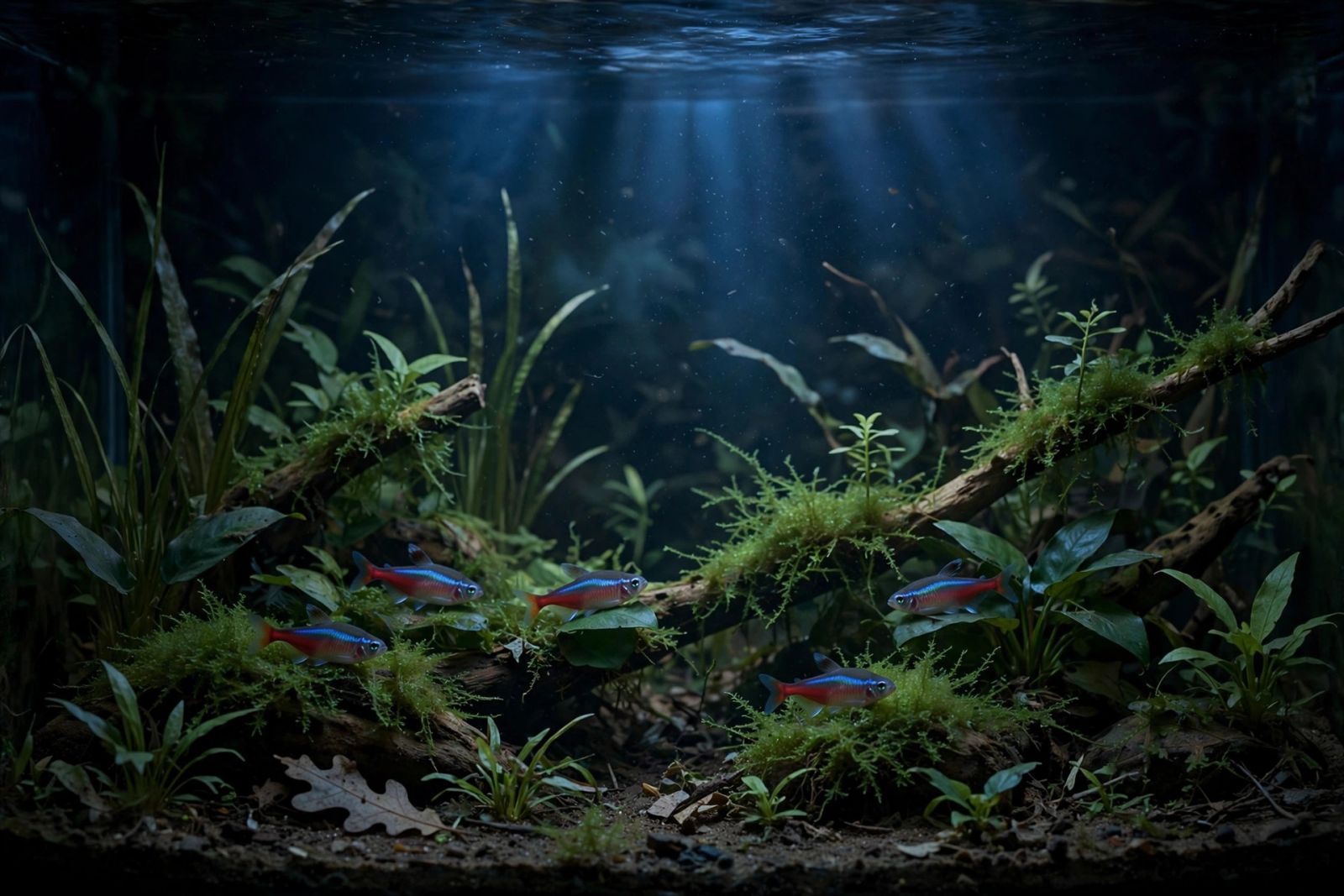
You walk past the tank at night. Your guppy is hovering motionless in a corner. The corydoras is lying flat on the substrate. One tetra is tilted at a strange angle behind a leaf. Everything is still and for a second, your heart stops. Relax. In most cases, your fish is simply asleep. But fish sleep nothing like we do, which is exactly why it looks so alarming.
You walk past the tank at night. Your guppy is hovering motionless in a corner. The corydoras is lying flat on the substrate. One tetra is tilted at a strange angle behind a leaf. Everything is still and for a second, your heart stops.
Relax. In most cases, your fish is simply asleep. But fish sleep nothing like we do, which is exactly why it looks so alarming.
Almost all bony fish have no eyelids, their eyes stay wide open whether they are awake or resting. So forget the closed eyes test entirely.
Fish sleep is really a low-metabolism resting state: brain activity slows, gill movement slows, heart rate drops. There is no REM phase, no dreams, just deep recovery. Look for these signs instead:
| Sleep style | Species and behaviour |
|---|---|
| Hoverers | Angelfish, guppies, tetras, hang motionless in the mid-water or near plants. For angelfish specifically, see angelfish: keeping the Amazon's elegant cichlid happy in a planted tank. |
| Bottom-sitters | Goldfish, corydoras, bettas, sink to the substrate or rest on leaves, sometimes lying sideways. Bettas famously sleep on broad leaves: best live plants for a betta tank. |
| Hiders | Shy species tuck into plant thickets, rock crevices or caves. |
| Schoolers | Some shoaling fish gather together at night for safety in numbers, zebra danio care explains how a proper school behaves day and night. |
| Check | Sleeping | Sick |
|---|---|---|
| 1. Wake-up test | Wakes within seconds, a little startled, then swims normally | Stays listless, swims weakly, barely reacts even to food |
| 2. Watch the gills | Slow, even, rhythmic breathing | Gills flapping hard and fast, gasping at the surface |
| 3. Check the body | Color may fade slightly, regains full color when awake, fins relaxed | Clamped fins, white pepper-grain spots (ich), cottony patches (fungus), raised scales |
Turn on the room light gently or move near the tank. A sleeping fish wakes within seconds, a little startled, then swimming normally. A sick fish stays listless, swims weakly, or barely reacts even to food.
Asleep: breathing is slow, even, and rhythmic. Sick: gills flapping hard and fast, gasping at the surface, classic signs of bad water quality, low oxygen, or gill parasites. Keep water stable with a simple routine: the lazy keeper's guide to a clean aquarium.
A sleeping fish may fade slightly in color (a protective mechanism) but regains full color when awake, with fins naturally relaxed. Warning signs of illness: clamped fins, white spots like pepper grains (ich), cottony patches (fungus), or raised scales.
Important: pepper-like white spots plus a sharp drop in activity is very likely ich, one of the most common aquarium diseases. Do not dump random medication in; bad dosing crashes water quality faster than the disease itself.
Body signs pair with other health clues too: what fish poop tells you about your fish's health covers the earliest digestive warnings.
A tank in darkness hit by a sudden bright light startles sleeping fish into frantic darting, they can injure themselves on glass or jump out. If you check the tank at night, turn on a soft room light first and let things brighten gradually.
Sound travels about 4.5 times faster in water than in air. When fish are asleep, vision is offline and they rely entirely on their lateral-line organs to sense vibration. A slammed door or heavy footsteps near the tank at midnight lands as an explosion. Move gently.
In a heavily planted tank, plants produce oxygen by day but consume it at night, competing with the fish. Dissolved oxygen hits its lowest point just before dawn. In a jungle-planted tank, keep an eye on oxygen levels so your fish sleep soundly.
If you keep nocturnal species, plecos, catfish, knifefish, remember their day starts when your tetras day ends. A sleeping mid-water fish resting on the bottom is an easy target for a nighttime bottom-dweller's nips or worse. Know each species schedule before mixing.
Tip: Once you understand fish sleep, nights in front of the tank become one of the hobby's quiet pleasures. A dark, calm tank with stable water and comfortable shelter, driftwood hides and plant thickets, the kind of natural decor CozyWoodLab builds by hand, gives your fish the safe rest they need to stay healthy and bright.